
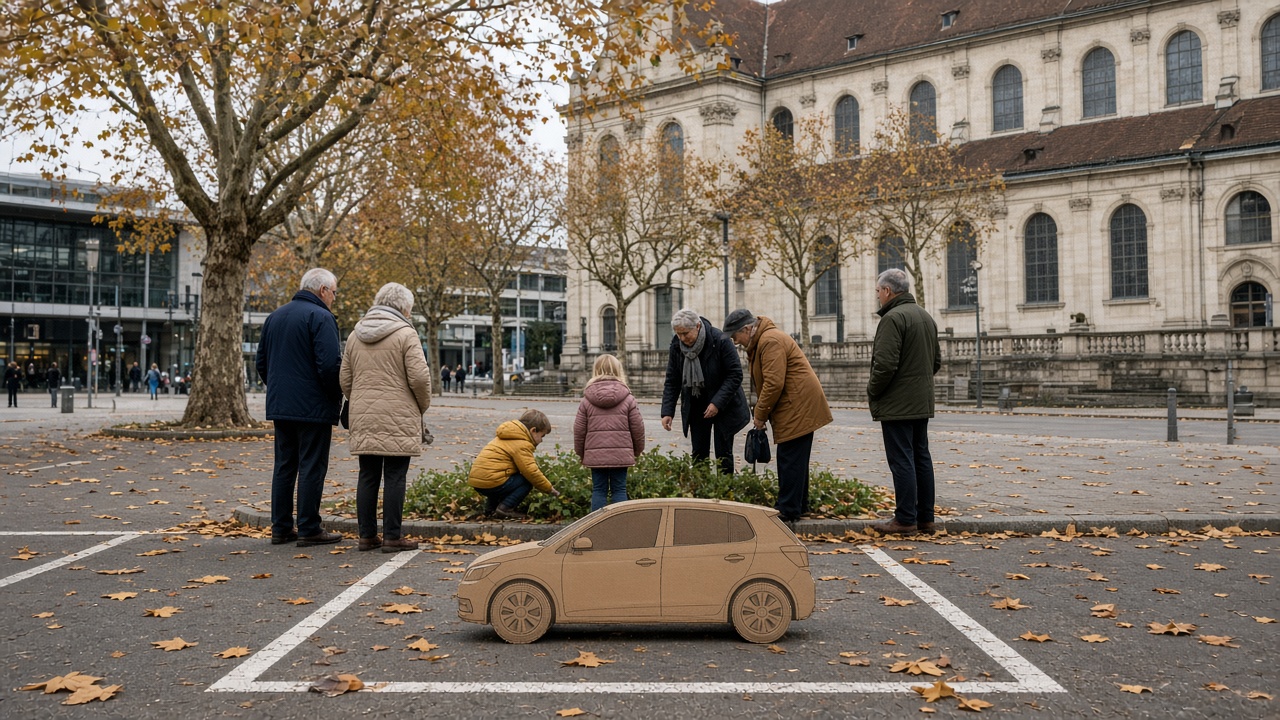
BERN - Klimagrosseltern der Stadt Bern und Agglomeration, the climate grandparents of the city and its suburbs, took over a parking bay outside the Heiliggeistkirche on Saturday. The action was called Living Space Instead of a Parking Space. Entry was free.
The point was the measurement. A standard bay is about 15 square metres. The group stood a cardboard car on that patch and treated the space behind it as room for play, conversation and a little nature. Dead metal, they argued, is a poor use of the square in front of the station when the same ground can hold people.
A local action in a national climate argument
Bern's federal politics this month is about treaties, bank capital and army money. Saturday's action was smaller and closer to the pavement. It still sits in the same season. The Federal Council has already set 2035 climate targets that cantons will have to help deliver, and housing rules in Zurich and Lausanne are being rewritten because empty homes have almost disappeared.
Parking is the everyday version of that argument. Station squares in Swiss cities are where commuters, tourists and campaigners share the same kerb. A cardboard car does not change the building code. It does make the area of one bay visible to anyone walking from the train to the church.
The event listing does not call for a citywide car ban. It describes the bay as room for play, meeting and a little nature, in place of a parked car.
Why the square matters
Bahnhofplatz is the front door of the capital. Federal staff, SBB passengers and Saturday shoppers all cross it. An action there is seen by people who will also vote on 27 September and who will live with whatever the autumn session decides on energy and building standards.
For the national target that sits behind local stunts like this one, see our report on the 2035 climate framework. The building side of the same story, heat pumps against oil, is in last week's heating figures. Zurich's density vote is covered in the cantonal council piece.