
ZURICH - Crime in Switzerland rose between 2022 and 2025, both in police statistics and in offences that never get reported. That is the finding of the second national Crime Survey, conducted by the ZHAW and the University of St. Gallen together with the Conference of Cantonal Police Commanders, which questioned 13,499 people aged 16 to 80 across the country.
The most striking number concerns fraud. In the twelve months before the survey, 15.9 percent of respondents had been victims of it, nearly double the 8.4 percent recorded in 2022. Around three quarters of those offences happened online, including through social media. Property offences also rose, while sexual offences were the exception: their victimisation rate did not increase.
Not just a reporting effect
Reporting rates stayed virtually unchanged over the three years, which matters for how the numbers are read. "This means that the rise in recorded crime is not primarily attributable to a greater willingness to report offences," said Dirk Baier, co-leader of the project and professor at the ZHAW. The increase, in other words, is real.
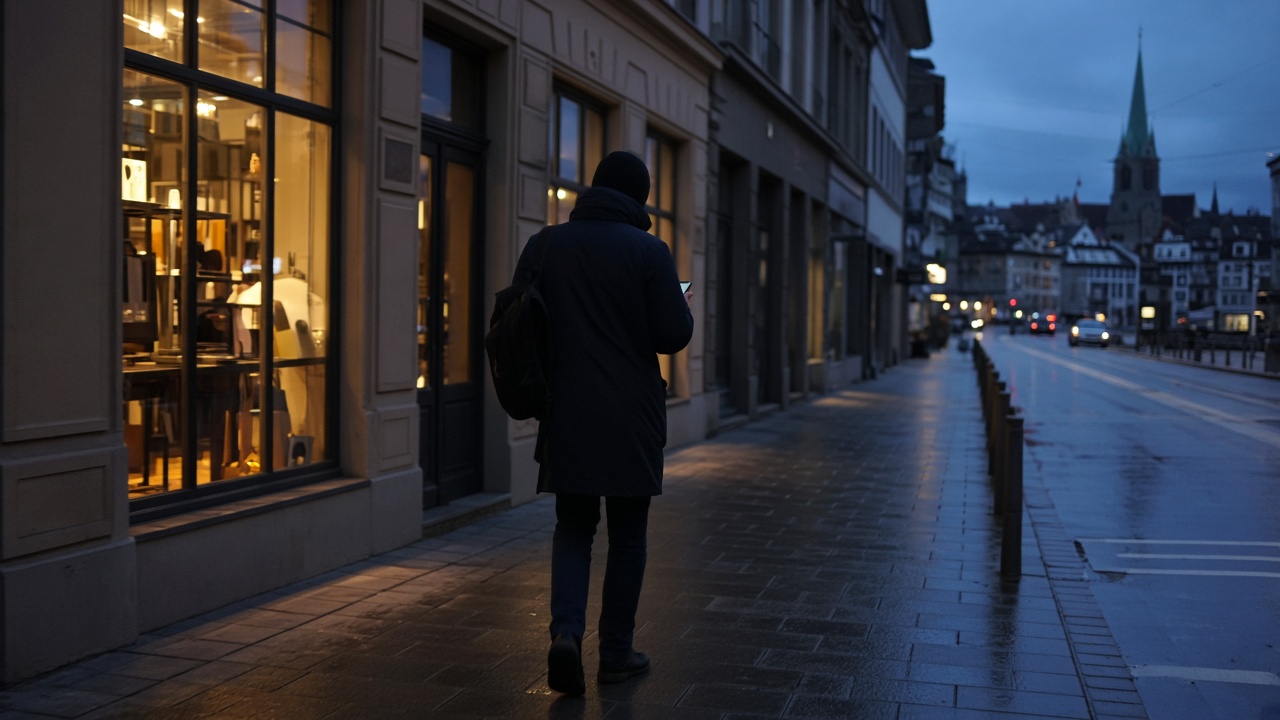
The subjective side has shifted too. Some 83.1 percent of respondents said they felt fairly or very safe alone in their neighbourhood after dark, down from 87.6 percent in 2022. The share of people who had concretely feared becoming a victim of street crime in the past year rose from 11.1 to 15.8 percent, and 37.9 percent now judge the police presence in public spaces insufficient, against 28.9 percent three years ago. The decline in felt safety runs through almost all groups, with women dropping sharpest, from 82.1 to 75.9 percent. Only Italian-speaking Switzerland showed no significant change.
Take it seriously, do not dramatise it
The researchers themselves urge calm reading. "We must take this development seriously, without over-dramatising it," said Nora Markwalder, co-director of the project and professor at the University of St. Gallen. "Despite the decline in the sense of safety, the population continues to perceive Switzerland as a safe country." Trust in the police, the survey notes, remains high.
The fraud curve will ring familiar to anyone following the phishing warnings now going out from the Zurich city pension fund, and the street-safety questions echo a fortnight in which a riot at Zurich's Hardplatz left an officer injured. The survey's value is that it measures the mood behind both headlines.