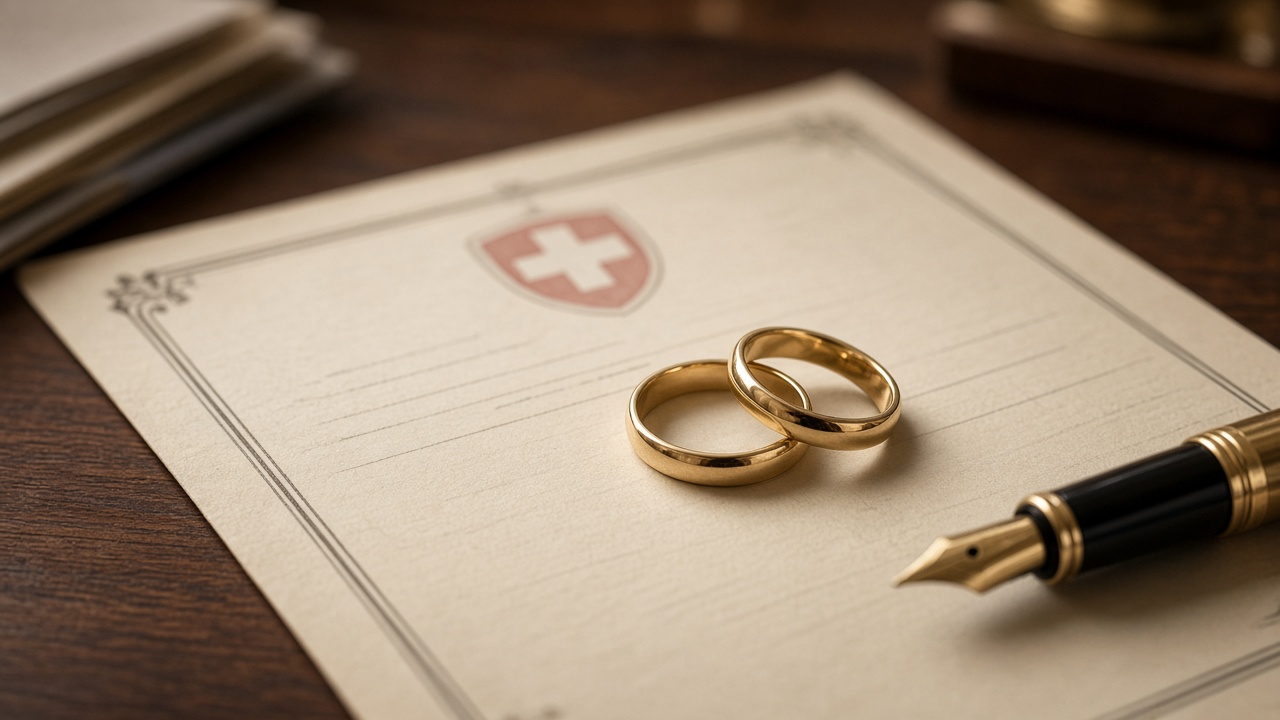
BERN - The government confirmed on Wednesday that the rules on married names will loosen at the start of next year. Starting in 2027, spouses will once again be able to carry a double-barrelled surname in everyday life, written with or without a hyphen, reviving an option that disappeared from Swiss civil law in 2013 when the name rules were last reformed.
The change restores a compromise many couples never stopped asking for. Since 2013, marriage in Switzerland has meant a choice: keep your own name, or take your partner's. The double name, once common on letterboxes, business cards and office doors, was struck from the official menu, to the irritation of couples who wanted the union visible in both names without giving either one up.
Children stay on a single name
The revival has a clear limit, and the government stated it plainly: the double surname is for spouses, not for the next generation. Children will continue to receive the name of one of their parents. The aim, as in 2013, is to keep family names traceable across generations and to prevent double names from stacking up into triples and quadruples over time.
That distinction will disappoint some parents who campaigned for fuller flexibility, but it reflects the same logic parliament applied when it reopened the question. The comeback of the double name for couples answers the fairness complaint; refusing it for children answers the administrative one.
What changes on 1 January
In practice, couples marrying from the start of 2027 will be able to opt for the double name at the civil registry, and the government will set out the details of how already-married couples can adopt it. The change lands in the same breath as several other New Year novelties, from the digitised driving licence process to the new rules that took effect with the biometric ID card this November. For the registry offices, the first working days of January will bring a familiar queue: couples, paperwork, and now one more box to tick.