
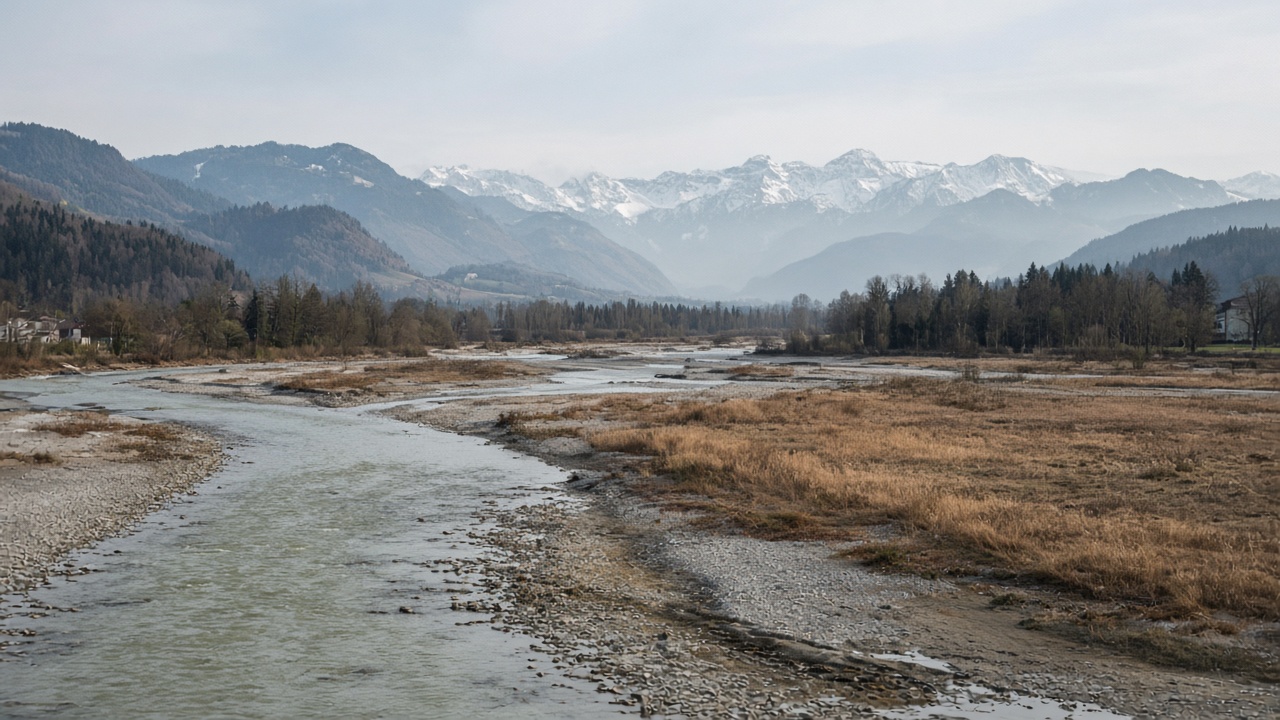
BERN - The federal government raised the drought alert to its highest level on Thursday for a large part of the country. Communes have already restricted water use. The warning sits on a simple rain total: since the start of April, Switzerland has had about half the precipitation it usually gets by this point in the year, according to MeteoSwiss.
The comparison people reach for is 1976, the drought of the century, and then the hot summers of 2003, 2015, 2018 and 2022. This one is arriving with less snow in the mountains than those earlier years could still count on. Glaciers and the winter snowpack used to refill rivers in July. Both are smaller now, which is why a dry spring becomes a summer problem faster than it used to.
What the top drought alert changes
The alert does not, by itself, ban hosepipes. Cantons and communes do that. It does tell them the national picture is no longer a local inconvenience. Farmers irrigating maize and potatoes are the first to feel the gap between a river that looks normal in a postcard and a river that is already on gravel. Households meet it as a notice on the commune website.
MeteoSwiss has a drought platform that combines measurements and short-range warnings. The June message from that system is that scattered rain can take the edge off for a few days and still leave the seasonal deficit in place. The test is July: whether storms refill soil and rivers, or only interrupt a dry spell.
From alert to harvest
Thursday's news is the warning itself. The summer has not properly started, and the water account is already overdrawn. Maize, potatoes and sugar beet are the crops that will show it first, in irrigation bills and in whatever the fields still hold in September.