
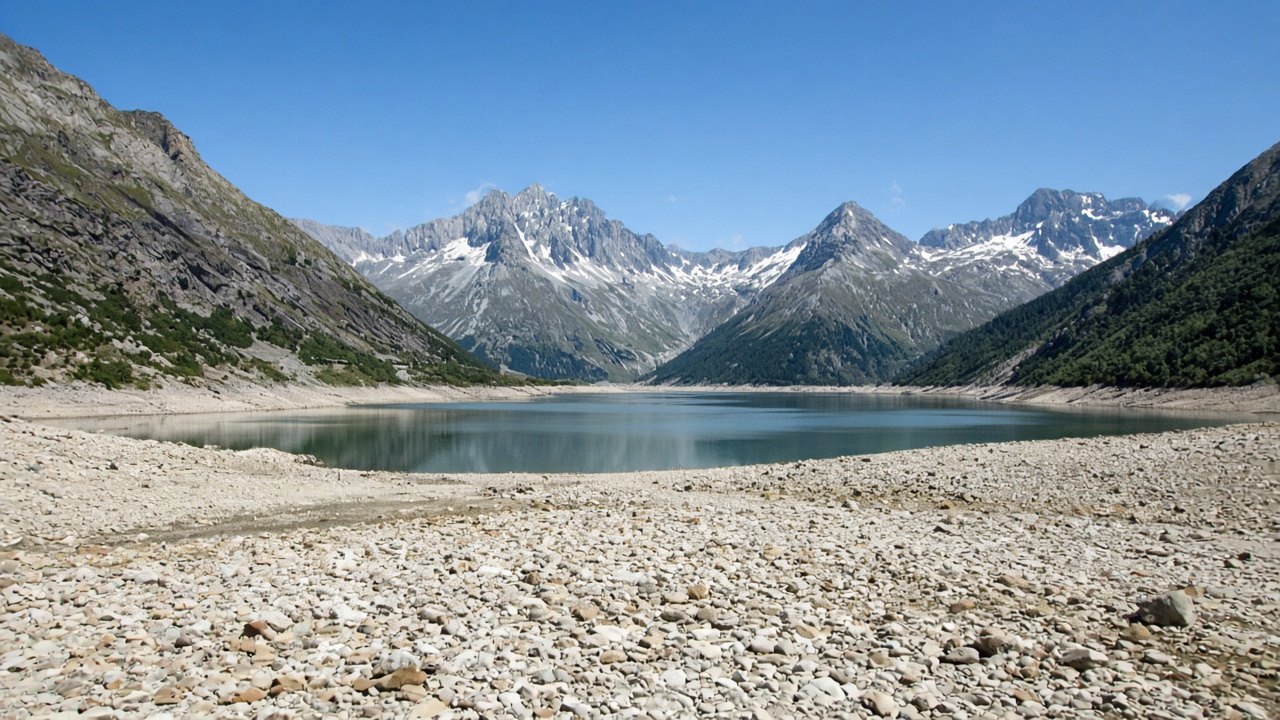
BERN - A month after the government raised the drought alert, the water account is still short. MeteoSwiss says Switzerland averaged 185 millimetres of rain from 1 April to 28 June, about half the norm. Storms in mid-July greened some fields for a few days. They did not rebuild the deficit.
Vincent Humphrey of MeteoSwiss has made the point that used to be the consolation: glaciers and the winter snowpack once covered a dry spring. Both are shrinking, so a rainfall gap now shows up in rivers and lakes in the same season, not in the next one. Several large lakes are at unusual seasonal lows. On Lake Constance the shortfall has been close to half a metre in the worst stretches of the summer.
Why a wet afternoon does not end a drought
Drought is a shortage of water in the soil, the rivers and the reservoirs over weeks, not a cancelled picnic. A thunderstorm can flood a street in Bern and leave the Broye and the Jura still counting millimetres. Communes that banned garden watering in June have mostly kept the rules. Farmers who irrigated through July have a cost line that will show up in autumn price talks, whether or not August turns wet.
The alert itself went to the top level on 25 June. What has changed by late July is the evidence that the warning was not a one-week headline. Heat is the other half of the same system. City warnings earlier in the month are in our 2 July note.
The bill will show up in the harvest
Insurers and the farmers' union will spend the early autumn translating this hydrology into francs: lost tonnes, extra irrigation, and whatever hail adds on top of the dry spell. Tuesday's job is simpler. The rain so far has not caught up.