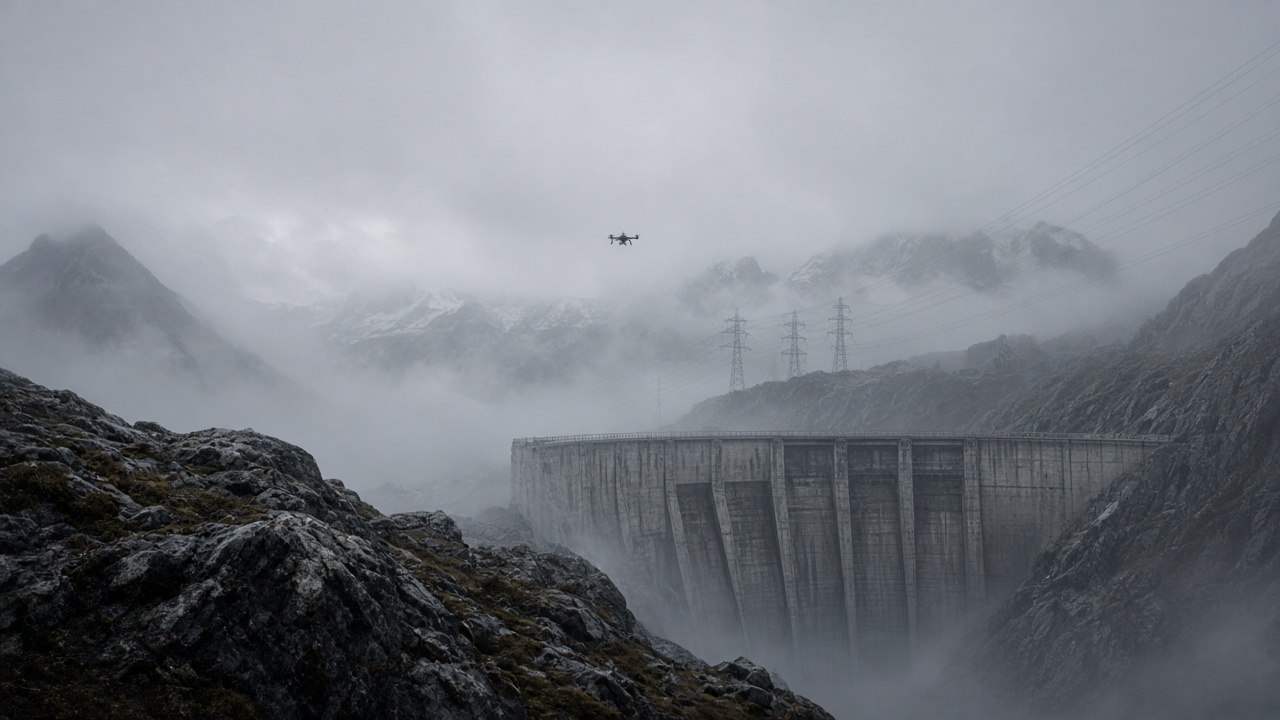
BERN - There is still no broader law on the physical protection of energy infrastructure, the office told the news agency. It is drafting a framework that would require the sector to guard against physical and electromagnetic threats. The government ranks sabotage, drones, rocket-propelled grenades and arson as the largest risks to nuclear power stations and dams. The office says the draft is meant to close a gap. It also says the draft does not give companies new powers. The monopoly on the use of force stays with the state.
What operators may do
Under the present rules, an operator may strengthen buildings, fit sensors and protective nets, and keep spare parts ready. Staff who see a drone call the police. They may not shoot the aircraft down, and they may not hold a suspect. By the time a patrol arrives, the office noted, the drone has usually gone.
Members of parliament have asked for a change. In an emergency, they want electricity companies to be allowed to switch on interception drones or jammers. That demand is not the same as the office's draft. The draft, as the office described it on Tuesday, is an obligation to protect. It is not a licence to use force.
The army will not cover every site
The defence ministry has already said the armed forces cannot stand guard at every power installation. In future the army is expected to be able to hold an area such as the Mittelland, and selected sites, against air attack for weeks at a time. The government's defence guidelines of May 2026 put the limit in one sentence: protecting every electricity site to the same standard, at the same time, will not be possible with the troops and the other tasks the army already has. The guidelines put the first duty on the operators.
Who is in charge when an incident sits below the threshold of war is still unsettled. The National Council's security committee wants a national reporting centre for drone sightings. That centre would be a place to phone. It would not, on its own, put a jammer on a dam wall. The wider air-defence purchase is a separate file: Bern has shortlisted Israel's Barak MX and France's SAMP/T for a national system. Local hardening of a turbine hall is the gap Tuesday's draft tries to name. Arson is on the same risk list. Police already treat the 29 October fire at B&T in Thun as arson, a reminder that the threat to Swiss sites is not only in the air.