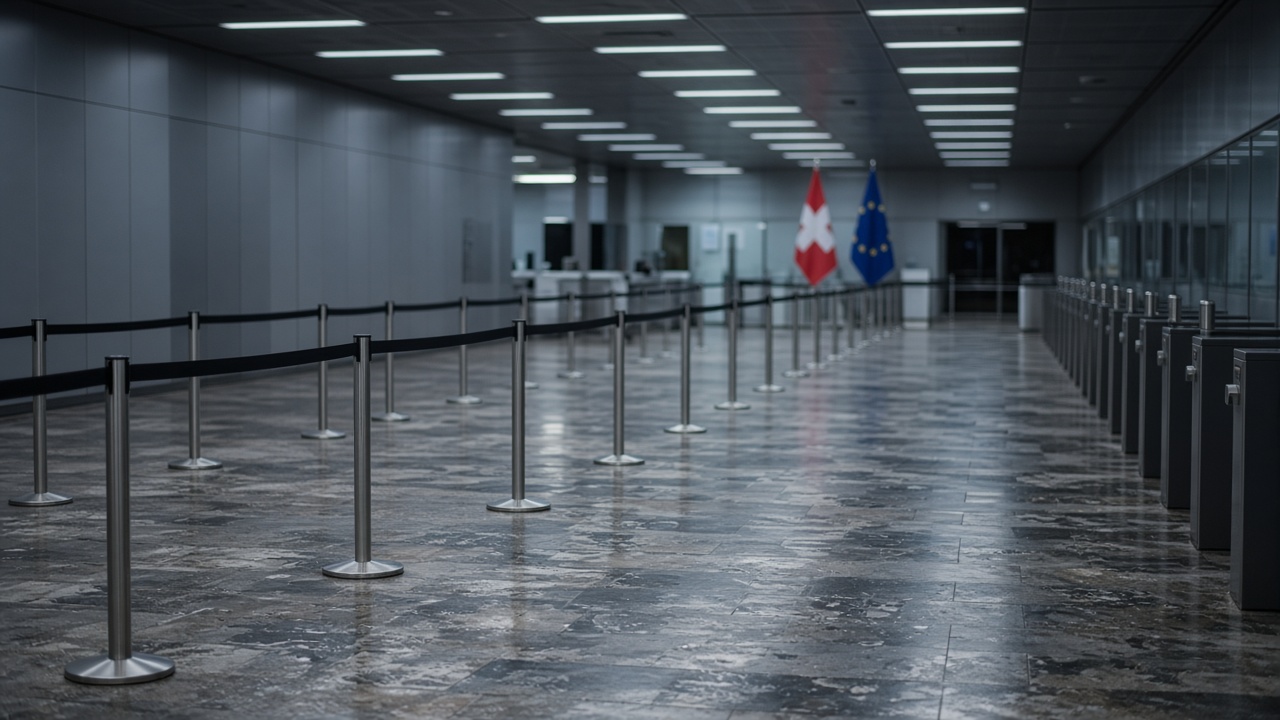
GENEVA - The Local reported on Tuesday that lawmakers moved the idea forward in September. The Federal Council has said the money would be redistributed to the population and the economy. Rene Schwok, who teaches European and international security at the University of Geneva, told the paper the proposal is gaining ground because of a fear that more EU nationals will come to live in Switzerland. He also said that if a levy of this kind were actually collected, it would apply to immigrants in general. The text now in parliament is narrower than that.
The fee is not a standing tax
Under the current plan, Schwok said, this is not a permanent charge on every European who comes to work or settle. It would start only after the Federal Council activates the safeguard clause inside the next set of Swiss-EU agreements, known as Bilaterals III. That clause allows temporary limits on free movement when thresholds for net immigration, unemployment or social assistance are crossed. If the clause stays off, no EU worker and no adult family member pays the fee.
The idea is older than the September vote. Economist Reiner Eichenberger floated an entry fee in October 2023. SVP parliamentarian Andrea Caroni filed a motion. FDP deputy Simon Michel put a similar proposal forward in 2025. What changed in September, on the account published Tuesday, is that lawmakers approved a levy of CHF 4,000, and at least CHF 2,000 for adult family reunification.
December in the National Council, then Brussels
The National Council still has to vote, most likely in the winter session in December. Even a yes from both chambers would not end the argument. Schwok said he had not yet seen a reaction from members of the European Parliament. If Switzerland introduced the fee, Bilaterals III would send the dispute to the Joint Committee. If that committee cannot agree, the case goes to a new joint arbitration tribunal.
If the tribunal sided with Switzerland, the Federal Council could apply the measure, and the EU could answer in proportion. The likely answer, Schwok said, would be the same tax on Swiss nationals who settle in the EU. If the tribunal sided against Switzerland, Brussels could retaliate under any of the eight agreements in the package, agriculture aside, and not only under free movement. Whether fewer people would come is unknown. Schwok's plain point was that a flat fee hits the poorest arrivals harder than the richest. The same week, Bern is still dealing with movement in the other direction: Italy has said Dublin returns can resume, and the shape of the EU package remains the fight behind an optional referendum the Federal Council still prefers.