
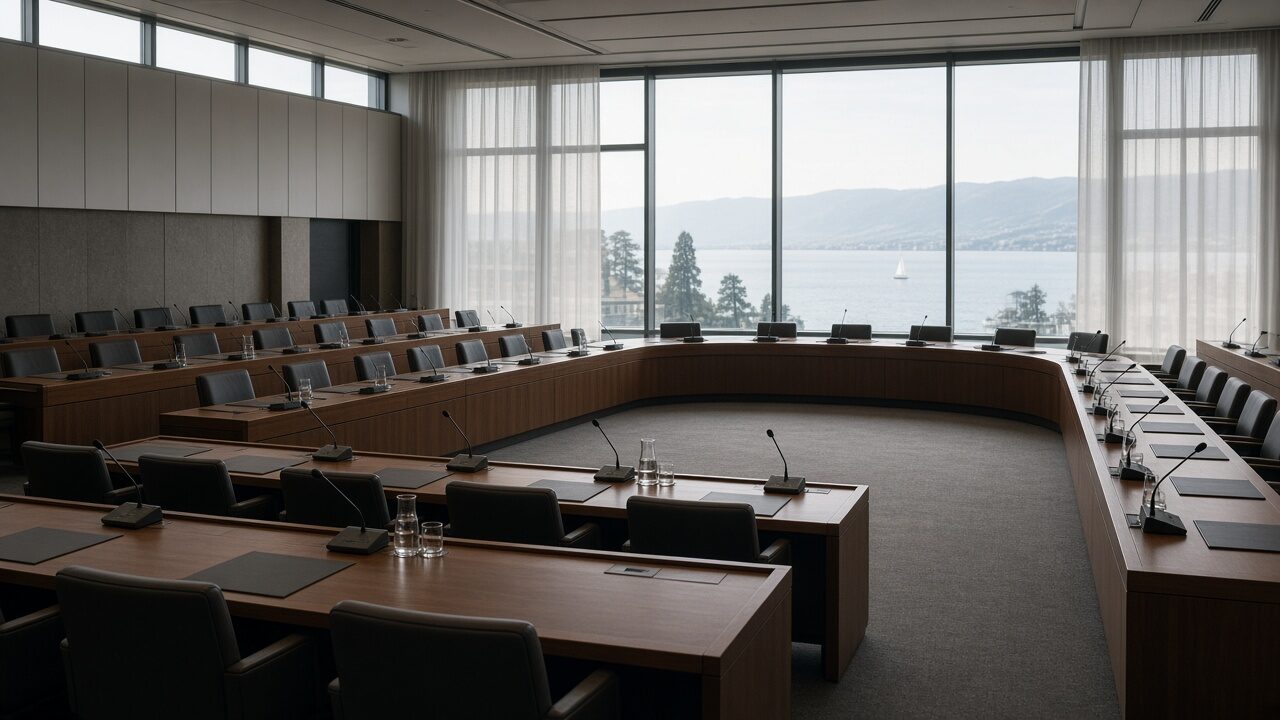
GENEVA - States meeting in Geneva have agreed to start writing an international instrument on lethal autonomous weapons, systems that can select and strike a target without a human decision. The deal was reached early on Saturday, 21 November, at the end of the seventh review conference of the Convention on Certain Conventional Weapons. The Federal Department of Foreign Affairs called it a significant step after more than ten years of talks. The text is to be elaborated in 2027 and 2028. It is not yet a ban, and it is not yet a treaty.
A Swiss chair, a thin mandate
Ambassador Julien Thöni, Switzerland's permanent representative to the Conference on Disarmament, chaired the meeting. He was backed on the weapons mandate by Peru's ambassador, Elmer Schialer Salcedo. All 128 parties to the convention, including the main military powers, accepted that an instrument should be drawn up. Because the convention decides only by consensus, they could not agree the legally binding mandate that a majority of states had wanted. The foreign ministry said the legal form will be settled at the end of the work, not at the start.
Countries that hold the technology, among them the United States and Russia, have resisted a binding text. Russia had already blocked observers, including the European Union, from the formal room, so much of the week was handled in informal talks. Thöni said some states would not accept the verb "negotiate" and would accept "elaborate". A group of governmental experts is to report to a meeting of the parties in 2028.
Why campaigners are disappointed
Humanitarian groups wanted a ban, or at least a negotiating mandate with a deadline for a treaty. Human Rights Watch said the outcome does not provide the urgent action needed, because the technology is moving faster than the diplomacy. The Stop Killer Robots coalition has called the mandate watered down. The foreign ministry answered that progress was still possible in a tense year, and that the agreement is a first answer to states and publics worried about weapons used with no human control. It also said the real work, finishing the instrument, is still ahead.
Switzerland has treated Geneva's humanitarian-law talks as part of its own foreign policy. The same convention is the home of earlier limits on weapons that injure indiscriminately. Saturday's result keeps that file open for two more years. It does not limit any army in the meantime, and it does not settle whether the final paper will bind anyone.