
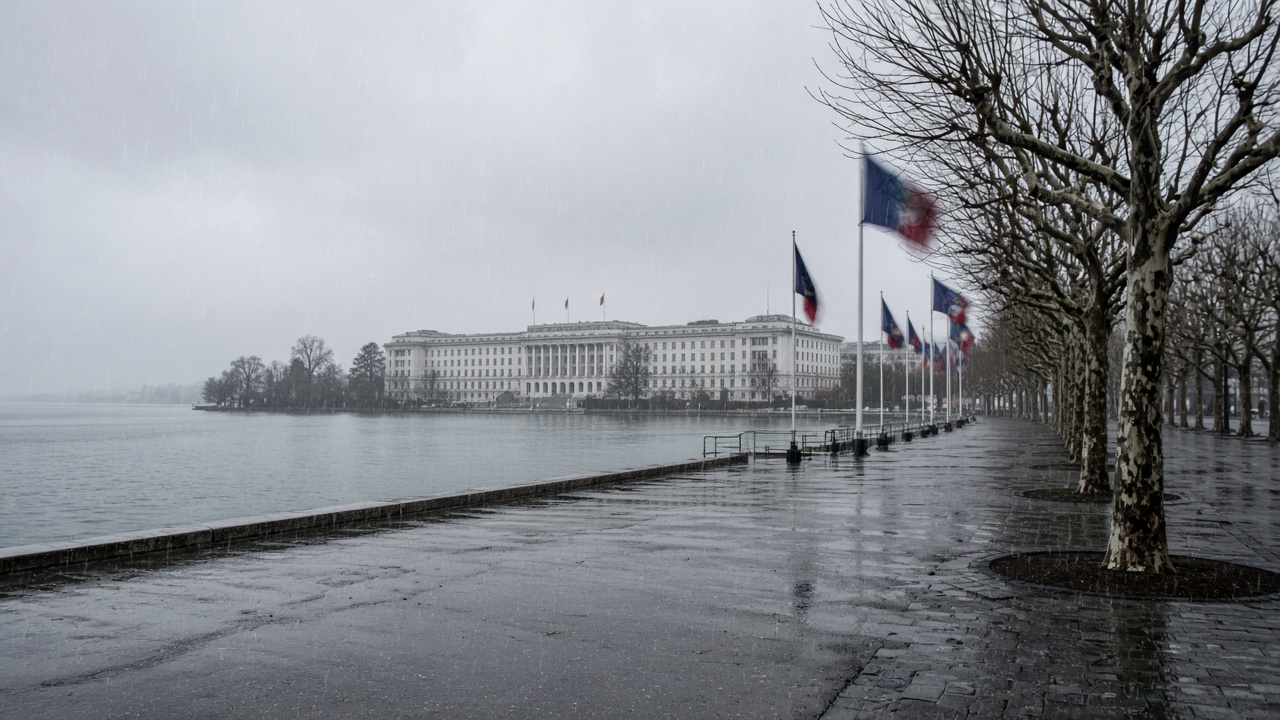
GENEVA - The meeting is called the Global IHL Dialogue. It runs on Tuesday and Wednesday. Delegations are there to work through seven outcome papers from the Global Initiative for International Humanitarian Law, the body of rules that is meant to limit suffering in armed conflict. The ICRC says civilians are enduring unacceptable harm in more than 130 conflicts. The papers, published ahead of this week's sessions, are written as guidance states can use, not as a new treaty.
What the Geneva guidance asks armies to change
One block of the advice is about language and culture. States are urged to push back against talk that treats some people as less deserving of protection. That includes how armed forces refer to an enemy and to civilians, checks on social media use by soldiers and officials, and a place for humanitarian norms in civic education and national commemorations. Other recommendations cover cultural briefings before troops operate in another country.
A second block is about the services civilians need in order to stay alive. The guidance sets out steps to protect health care, water, electricity, sanitation and communications. The examples are concrete: protected zones around essential infrastructure, no-strike lists for medical facilities, closer civil-military coordination, and safe sea corridors for vital goods. Mapping the civilian plants and roads that hospitals depend on is part of the same list. Geneva Solutions reported that participating states had already put several of these points into the recommendations.
A third block covers new technology. States are asked to keep checking and cross-checking information before a target is struck, so that digital tools do not weaken protection. They are also asked to regulate personal digital devices in operations, as one way to reduce sexual violence and the recruitment of children. The agenda lists Cordula Droege, the ICRC's director of law, movement and partnerships, as moderator of the opening plenary, where co-chair states introduce the seven papers.
Who has joined, and who has not
The initiative was launched in September 2024 by Brazil, China, France, Jordan, Kazakhstan and South Africa, with the ICRC. It has since grown to 127 states that have formally joined. Geneva Solutions reported that Israel, Russia and the United States have not. The consultations that produced this week's papers drew in more than 160 states, a wider circle than the formal membership. The dialogue then invites governments, civil society and others to say how they will carry the papers home: into legislation, military manuals, training and voluntary reports on compliance.
The political moment is booked for 7 December in Jordan. King Abdullah II is hosting a high-level conference there. Leaders of the 127 states that have joined are invited to show that the rules of war remain a government priority. Geneva this week is the technical handover. Amman next month is the photograph.
Switzerland is in the chair as depositary
Switzerland is the depositary of the Geneva Conventions, which is why this conversation keeps returning to the lake. Bern has said it fully supports the initiative and has pressed states that have not joined to do so. In April 2026, Switzerland and the ICRC held a third experts' meeting, on the precaution principle in attack. More than 400 specialists from more than 130 states took part. In February, Swiss officials and the ICRC gathered permanent representatives in Geneva to settle how the final papers would be adopted without weakening the law.
None of this binds a commander who has already decided to ignore the conventions. The ICRC's case is that the rules are not the problem, and that the failure is in applying them. The test of this week's dialogue is whether armies leave with instructions they will actually issue: who may be described as a target, which hospital stays off the list, and which digital feed is allowed into a strike decision. The foreign minister's trip to Pyongyang and Seoul last week was a different file. This one is the file Geneva exists to hold.