
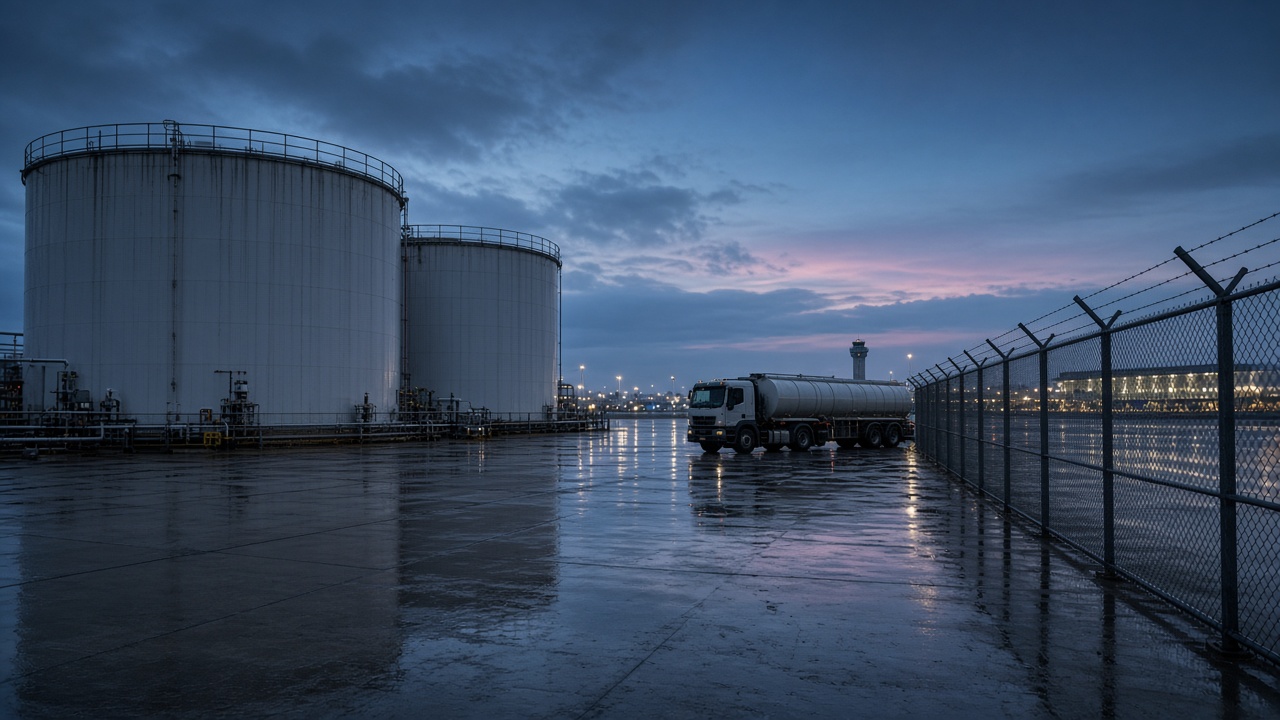
BERN - Roland Pfister, the federal delegate for national economic supply, on Tuesday allowed companies to draw up to 50,000 cubic metres of jet fuel from compulsory reserves. The window runs until 29 November 2026. It is the second release in a few weeks. Added to 30,000 cubic metres authorised in October, the volume now made available is 17.4 percent of compulsory jet-fuel stocks.
The Federal Office for National Economic Supply said this shortage comes from restrictions at refineries in southern France and Germany, and from disruption on the railways. November is a quieter month for flying. Zurich and Geneva still cannot cover themselves from ordinary deliveries, so both airports are on the reserve draw. The October release was aimed at Zurich, after low water on the Rhine and broken German rail freight. Tuesday's decision brings Geneva in as well.
Pfister is near the ceiling he can sign alone
The delegate may authorise withdrawals of up to 20 percent of a compulsory stock on his own signature. Above that line, the Federal Department of Economic Affairs, Education and Research has to issue an ordinance. At 17.4 percent, a further release that pushed the total past 20 percent would need that ordinance. Pfister cannot sign that further step himself.
The Rhine is still the longer constraint
Swiss oil supply has been tight for months, above all because barges have struggled on the Rhine. Road and rail are already busy, so one more delay can tip a product into shortage. Since September the government has used compulsory stocks four times. Diesel withdrawals remain authorised until 22 November. The office said petrol and heating oil are available, and that both are tight. Petroleum products cost 40 percent more than a year ago in the October price index. Diesel reserves are already open, and an 80 km/h motorway limit is still only under study.
The cost shows up in the SWISS result
The office says the reserve draw puts jet-fuel supply back on a guaranteed footing. SWISS, reporting on Tuesday, showed where the money goes. Nine-month operating profit rose CHF 10.2 million, to CHF 421.4 million, while kerosene costs about twice what it did in January. Aircraft are still being fuelled. Fare pressure sits in next year's hedges, which fall from 80 percent cover to 50 percent, and in a winter energy market already tight for gas and reservoirs.