
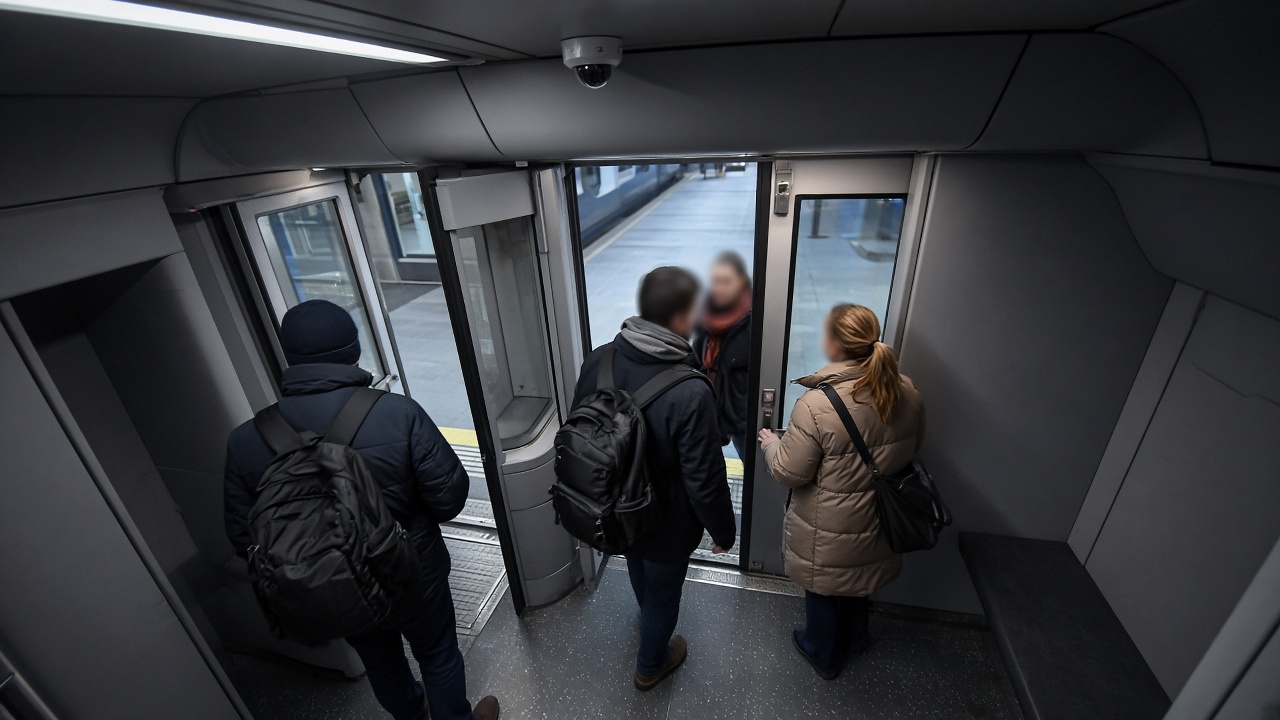
BERN - The occupancy bars in the SBB app are forecasts, not a live headcount. They draw on the timetable, the day of the week, holidays and known events. A test now under way asks whether cameras already bolted to carriage ceilings can replace that guess with a count of people getting on and off. Parquery, spun out of ETH Zurich, says its model hits 98 percent. Andrea Fossati, the company's chief executive, told reporters that a regular introduction on trains is not planned before 2029 at the earliest.
The count is meant to sharpen the SBB app
SBB confirmed to the Tages-Anzeiger that the work is a proof of concept: a check on whether the idea works at all. Whether the system is ever used, and when, is open. The railway's own account is the same. A camera method has been examined. It is not decided. Any later system would have to give travellers a practical gain, which means a more accurate picture of how full a train or a carriage is, so people can spread out, change carriages faster and keep the stop short.
No new cameras are required for the trial. The software uses the security cameras already watching the entrance areas. SBB already counts some passengers with optical sensors above the gangways into the seating areas. Those sensors were announced in 2023 and are being extended from regional trains into long-distance services. Parquery argues that a camera reading is cheaper and copes better when people stand close together. The security job of the cameras stays as it is. The counting layer, the company says, only looks at the live video stream.
What the cameras are not supposed to store
Parquery says the counting system records neither video nor stills, does not use facial recognition, and does not identify anyone. Fossati said it only reads the live stream. SBB's published position is firmer still: if a new system were introduced, the only purpose would be to determine how many people are on board. Identification and facial recognition would be ruled out. Before any rollout, SBB says it would talk early to the Federal Data Protection and Information Commissioner.
The technical wrinkle is that a pure turnstile count can fail when someone's appearance changes. Testers found that a passenger who boards in a cap and leaves without it can be counted wrong. Parquery says it trained the model to treat that as one person. Matching a figure in a doorway is not the same as putting a name to a face, but it is the point privacy lawyers will test. SBB says the existing security recordings are a separate process and are not changed by the trial. The promise that "nothing is stored" applies to the counting software, not to the cameras' ordinary security role.
SBB dropped a station face-recognition plan in 2023
The caution is not theoretical. In 2023 SBB wanted cameras in large stations that could recognise faces, then pulled back after data-protection groups objected. A carriage trial that reuses security cameras will be read against that retreat. The railway's answer this time is that the product, if it ever leaves the lab, would produce anonymous totals for the occupancy display and nothing else.
The test also sits beside a much larger technology bill. SBB and the federal transport office have put the cost of digitising safety-critical rail systems, including the European signalling standard, at about CHF 7 billion through 2045. Passenger counting is a small slice of that world. It is the slice passengers would see in the app. Until SBB decides, the bars on the departure board remain a forecast, and the cameras stay what they were installed to be.