
BERN - Four sets of rules reach their start date on 1 November. None of them is a surprise. Each one tells a different part of the federal administration how to do work that parliament or an international duty has already required. For travellers, farmers and police, the practical change is what the ordinances now make explicit.
Airlines prepare passenger data for February 2027
The passenger-data ordinance tells airlines which formats and deadlines to use when they send records to the Passenger Information Unit at the Federal Office of Police (fedpol). The duty to transmit starts in February 2027. Passengers are to be told about the collection before they book. Parliament has already passed the underlying law. The stated aim is to disrupt terrorism and serious crime, inside data-protection rules. Sunday does not put a new form in front of someone booking a flight this week. It does start the clock on how carriers must build that feed.
Schengen alerts get a clearer Swiss rulebook
A second ordinance sets out the national part of the Schengen Information System, known as N-SIS, and the work of the SIRENE bureau at fedpol. That office is the Swiss contact point for the shared alert system. The text standardises how authorities manage and exchange personal data with other Schengen states. Bern describes the change as the domestic piece of obligations Switzerland already carries, aimed at internal security and at border checks that rely on the same records as the rest of the area.
The provisional passport becomes an emergency passport
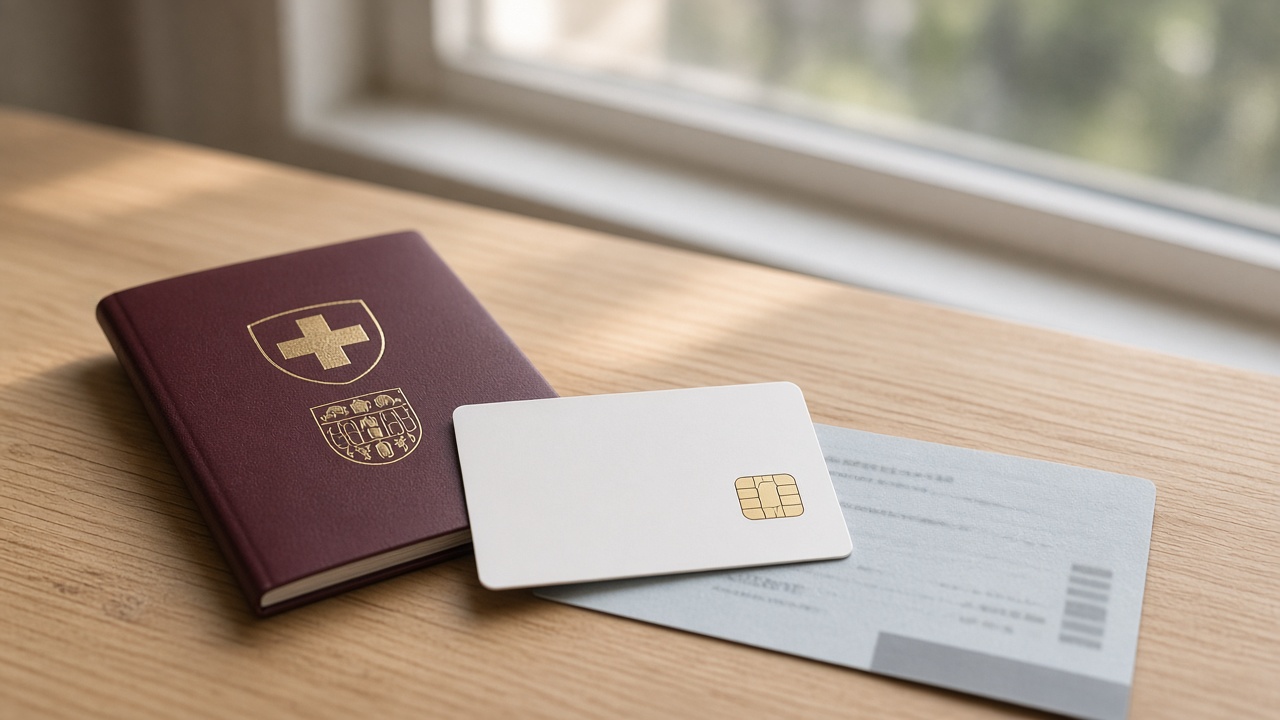
The identity-document ordinance now calls the old provisional passport an emergency passport, a rename meant to make the document's purpose clearer. Identity cards are offered with a chip and without one. The rules on taking fingerprints for chip passports and chip identity cards are written out with international standards in view, and the fees for the various documents are set out again in the text. Anyone applying for a new passport or identity card meets the updated ordinance. Documents already in circulation are not cancelled by the change of name.
Applications for the new biometric identity card open on Monday 2 November, as fedpol set out earlier. The chip holds a facial image and two fingerprints, and the fee matches the card it replaces. Cards without a chip remain valid for travel in the European Union until they expire. The 1 November ordinance is the legal frame. The queue, if there is one, starts the next morning at cantonal passport offices and at Swiss representations abroad.
Cattle farms are either free of BVD or they are not
The Federal Food Safety and Veterinary Office (BLV) ends a two-year transition on bovine viral diarrhoea, also called BVD. Farms are no longer marked "not blocked", "blocked" or "individual animals blocked". From 1 November a herd is "BVD-free" or "not BVD-free". Free farms may move animals without the old restrictions. Farms that are not free still face conditions. The office says more than 99 percent of Swiss cattle holdings are already free of the disease. The point of the simpler label is eradication, not a new lockdown of the national herd.
The same Sunday also brings a European customs fee on parcels from Switzerland into the EU, covered separately. That charge is Brussels' rule, not a Swiss ordinance. The four changes above are the ones that take effect in Swiss law today.