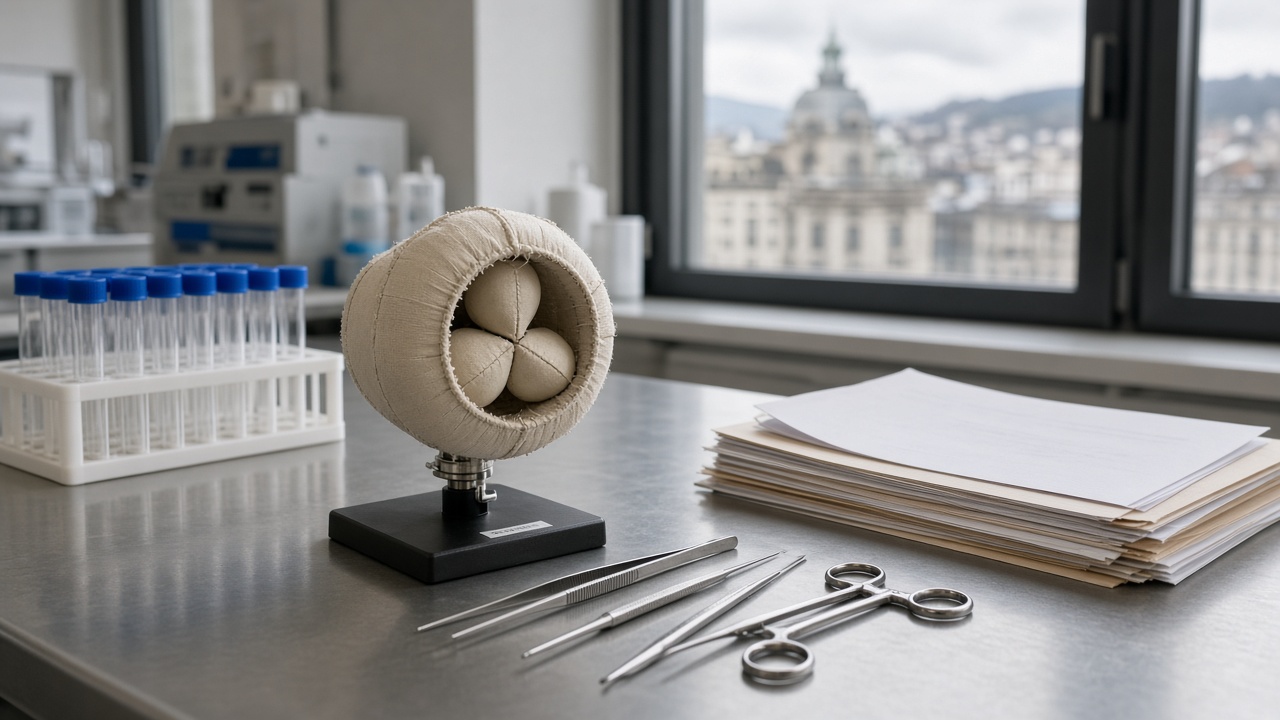
ZURICH - Francesco Maisano, then head of the USZ heart clinic, implanted the Cardioband he had helped develop in 2016. It was meant to repair a leaking tricuspid valve, on the right side of the heart. The hospital's press release called the clinic a pioneer and the method safe. It left out what happened in the operating room: the valve stayed leaky, a wire broke, and a second band had to be laid over the first. The product was in the highest risk class. In 2016 it had no CE certificate, and it had never been tested in a person for that valve. The hospital needed an exceptional authorisation from Swissmedic. The files, obtained under the freedom-of-information law, show the authority granted it and asked neither the maker nor the hospital about safety.
Three approvals, and a death after the third
An internal email from August 2016 records an inspector saying she understood the aim was not to be too insistent. A colleague confirmed that, in this case, they had decided not to ask for further reports. Swissmedic later classed the broken wire as a serious event. The manufacturer announced extra training for surgeons. The authority did not check whether that training took place, or whether it was an adequate answer. Ten weeks after the wire broke, Swissmedic issued a second exceptional permit. A third followed in January 2017. In all three patients the valve stayed leaky. During the third implant a coronary vessel was injured. The patient died 18 days later. Karoline Mathys of Swissmedic told SRF the documents showed no direct link between the product and the death. That judgement rests on a letter from the hospital. The authority's own files show no separate inquiry into the death. Coronary injury was a known, recurring complication of the device.
What the May inquiry already found
An administrative investigation published in May found serious shortcomings at the clinic between 2016 and 2020, including more than 70 unexpected deaths. In 13 cases the use of innovative products, among them the Cardioband, was judged inappropriate. A central charge was the selective reporting of results and the withholding of serious complications in scientific papers, especially on this device. The report said a conventional operation would probably have produced better results for the patients. Maisano held stock options in the manufacturer. The USZ hospital board said it would report 11 unexpected deaths and the 13 inappropriate uses to the Zurich public prosecutor. ETH professor Jörg Goldhahn, who read the Swissmedic file, called the approach a waiver of examination, and said it does not fit the authority's mandate. Swissmedic replies that it carries out the tasks parliament gave it on a risk-based and proportionate basis, that a full review of an emergency authorisation under time pressure is very difficult, and that the decision to use an uncertified product in a medical emergency sits with the doctor. Goldhahn's wider point is that nobody now knows how many highest-risk devices are implanted, and that events can pass unseen. The same hospital is this week isolating a contact from the Ebola evacuation on a different ward, under a protocol written for known infectious disease.