
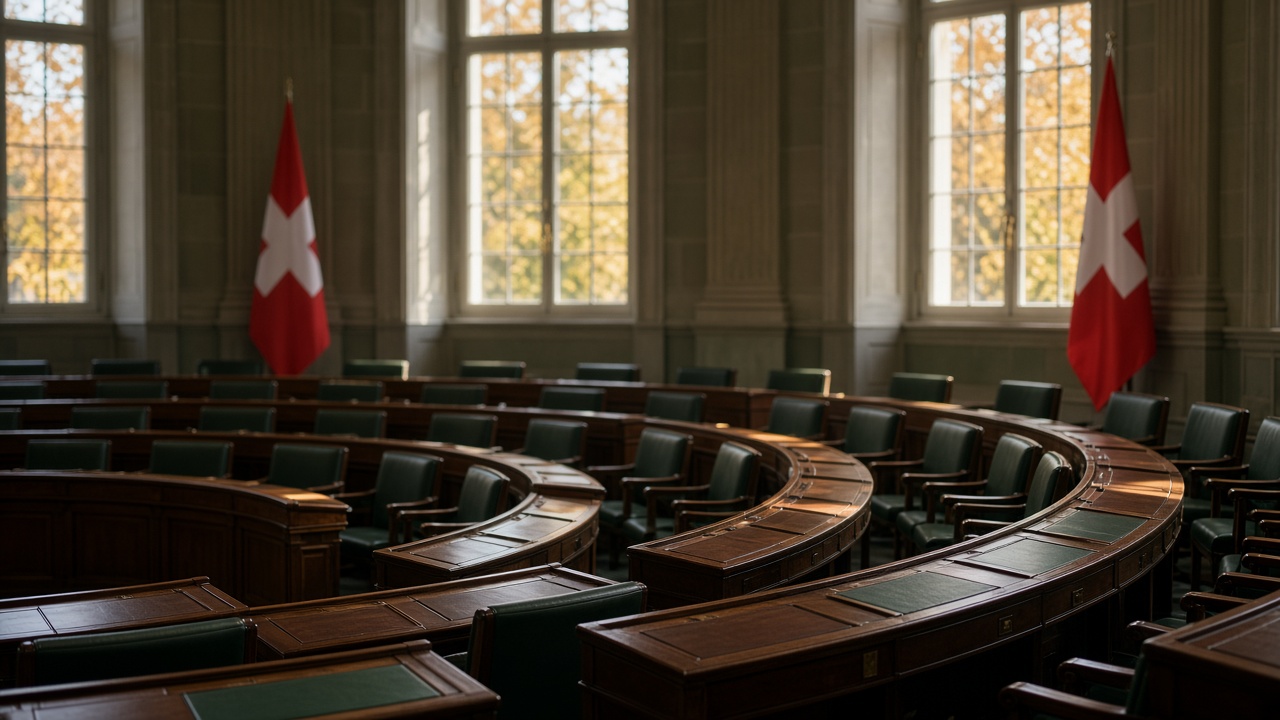
BERN - The Council of States voted on Wednesday to require UBS to back its foreign subsidiaries with 90 percent Common Equity Tier 1 capital. Senators split 29 to 16 in favour of that rule, and against a cheaper compromise that would have let the bank cover half of the backing with Additional Tier 1 bonds.
The result is a setback for UBS, which had spent the week arguing for the committee plan. It is also short of the 100 percent CET1 backing sought by Finance Minister Karin Keller-Sutter and supported by the Swiss National Bank. The upper house rejected the government's full requirement before it adopted the 90 percent line.
What the UBS capital rule changes
The bill is part of the banking overhaul written after Credit Suisse collapsed in 2023 and was taken over by UBS. Foreign units currently have to be at least 60 percent backed, largely with CET1 capital, the highest-quality buffer a bank can hold. The Federal Council's full package would have required about $20 billion more of that capital.
UBS has said a 90 percent rule would cut about $4 billion from that extra bill compared with a 100 percent rule. On the bank's own sums, the wider overhaul would still mean about $18 billion of additional CET1. Chief executive Sergio Ermotti said on Tuesday that 90 percent was no real compromise. UBS shares were up 0.9 percent at 09:17 GMT after the vote.
Hard equity is the most important lever in any crisis.
That was the line Keller-Sutter put to lawmakers before the ballot. She added that Switzerland could not handle a collapse of UBS, whose balance sheet is larger than the Swiss economy. She has argued since the start of the month that a softer mix of CET1 and AT1 bonds would be legally uncertain and out of line with international standards. FINMA, the market supervisor, has taken the same view as the finance ministry and the central bank.
National Council vote still ahead
The text now moves to the National Council. A final law is unlikely before the end of 2026 and is more likely in 2027. Until both chambers agree, neither the 90 percent rule nor the government's 100 percent plan is in force.
Chairman Colm Kelleher warned on 17 September, at a banking event in St. Gallen, that UBS would have to think about its Swiss base if the rules left it unable to compete. The upper house heard that warning and still refused the 50 percent AT1 option the bank said it could live with. The same chamber ran out of time on Thursday and only finished the debate today.
Wednesday's vote sits in a straight line from the Zurich exchange on Tuesday and from Keller-Sutter's earlier criticism of the committee. Readers who want the longer capital-rules file can start with the 1 September report.