
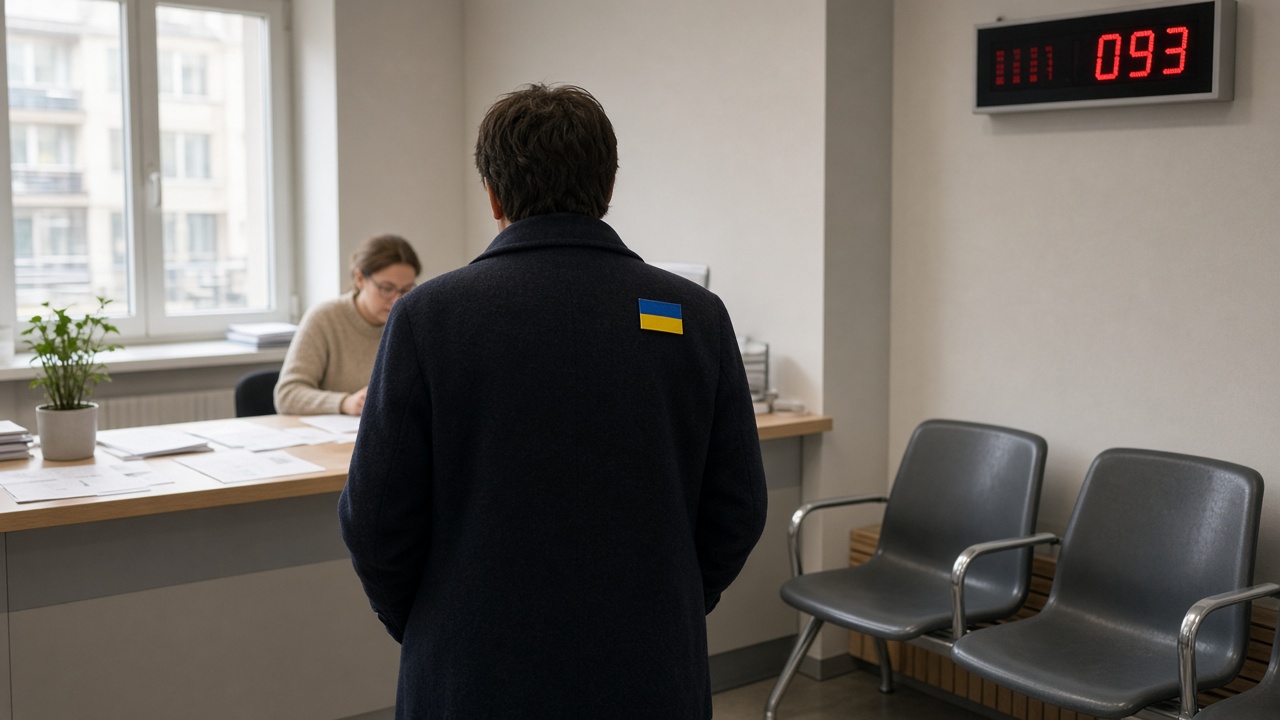
BERN - The federal government wants to give cantons the freedom to decide how much social assistance they pay to refugees from Ukraine, opening the door to rates as low as asylum social assistance. A corresponding amendment to Asylum Ordinance 2 is now in consultation, Keystone-SDA reported on Sunday.
The trigger is a date in the calendar. From next year, around 46,000 people with protection status S, the temporary status created for people fleeing the war, qualify for ordinary social assistance for the first time. Without the change, they would receive the same rates as Swiss nationals, which are higher than the assistance paid to asylum seekers.
Cantons asked for exactly this lever
Mathias Reynard, president of the Conference of Cantonal Social Directors, confirmed in response to the news agency that the cantons had asked the federal government to let them determine the level of contributions themselves. The request has been incorporated into the consultation draft, he said, and would allow payments down to the level of asylum social assistance.
Behind the request sits Relief Package 27, which abolished the federal lump-sum payment to the cantons for people with S status where that status is linked to a residence permit valid for five years or more. The Valais government member wrote that the shift to ordinary social assistance would mean a significant increase in costs for the cantons.
Municipalities want a say
The Swiss Association of Municipalities welcomed the amendment in principle, but with a condition: the municipalities want a say, because they would bear the main financial burden of the payments. Aid organisations take a different view and warn of the social consequences if families who fled the war are pushed toward the lower asylum scale.
The debate lands while Switzerland deepens its other engagement with the country: the Swiss-Ukrainian reconstruction agreement entered into force this month, giving Swiss companies a legal basis to help rebuild. It also comes as the broader asylum numbers move in the opposite direction, with applications down 16 percent in the first half of 2026.