
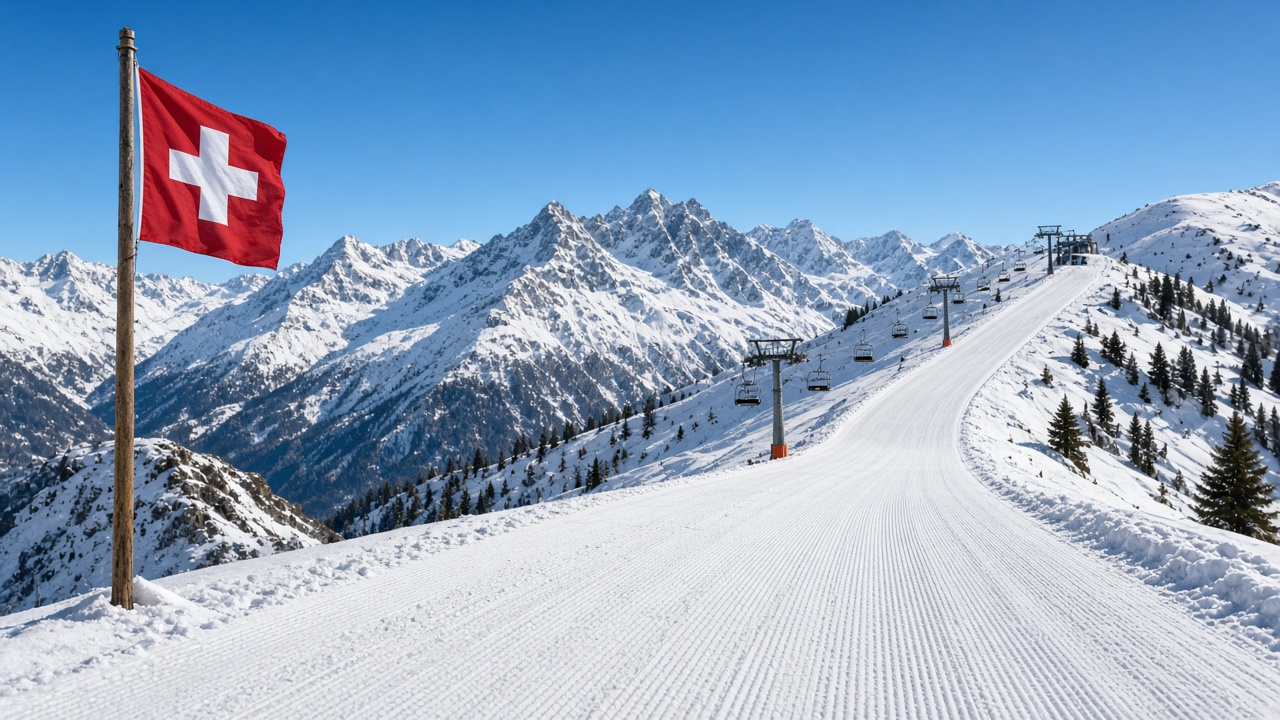
BERN - Switzerland's bid for the 2038 Olympic and Paralympic Winter Games cleared its second parliamentary hurdle on Friday. The Senate committee for science, education and culture backed the project by 10 votes to 0, with two abstentions, after the National Council had already given its support at the start of the month.
The committee, which sat on Thursday and Friday in Bern under its president Matthias Michel of Zug and in the partial presence of sports minister Martin Pfister, largely adopted the lower chamber's version. Its additions concern one thing above all: the money.
Fixed shares before any credit request
Three clarifications now frame the financial guarantee. First, the contribution of the cantons and communes to preparation and staging costs must be financial, not in kind. Second, by 11 votes to 1, the committee wants the split of that contribution between host cantons and non-host cantons definitively fixed before the federal credit requests are published. Third, only cost overruns caused by inflation could qualify for an additional credit.
A minority wanted the legacy strategy to include measurable goals for nature and landscape, so that the Games leave host regions a positive balance for biodiversity beyond the compensation the law already requires. The committee rejected that idea by 7 votes to 3 with two abstentions.
CHF 2.2 billion over ten years
The budget framework covers the ten years from the award to the Games: CHF 2.2 billion in total, financed mainly from private funds. Federal aid is capped at CHF 200 million, and the cantons must contribute at least the same amount. Further sums would cofinance the Paralympic Games, cheaper public transport during the event and the provision of venues across the country. The Confederation would also carry the security tasks, estimated at CHF 40 to 80 million.
The concept is deliberately modest: decentralised competitions across the four language regions, no new construction, and what the draft calls the highest national and international standards of sustainability, transparency and governance.
A decision in spring 2027
Switzerland holds a privileged dialogue with the International Olympic Committee, which lets it assemble a bid without competition until the end of 2027. If the file meets the IOC's requirements, the Games go to Switzerland; the IOC is expected to decide at its session in spring 2027.
One thing the project does not foresee is a popular vote on the bid, an omission its critics already cite. The winter sport regions themselves are watching closely: after a season in which Graubuenden hotels reported a solid first winter week, the prospect of a home Games in twelve years is the kind of long-term booking the Alps do not often get offered.