
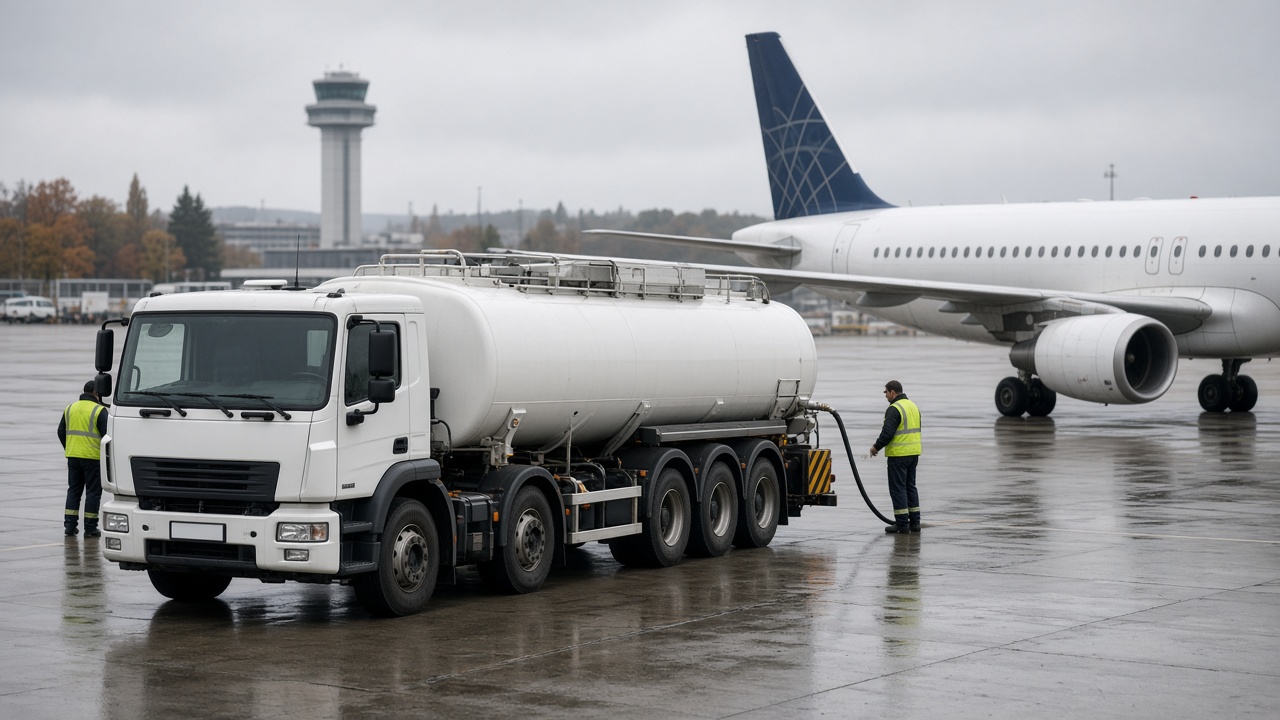
KLOTEN - Switzerland is dipping into its emergency kerosene stocks for the first time in years to keep Zurich Airport's fuel farms full. The Federal Office for National Economic Supply authorised withdrawals of up to 30,000 cubic metres of jet fuel from the compulsory reserves, a window that runs from 15 October to 1 November.
The decision was signed by Roland Pfister, the government's delegate for national economic supply. The released volume represents about 6.5 percent of the available jet fuel reserve, and officials say it has already averted a supply bottleneck. Flights are not being cancelled for lack of fuel, and Swiss International Air Lines says its aircraft are refuelling without restriction.
A logistics problem, not an oil shortage
The squeeze has nothing to do with the price or availability of crude. Kerosene reaches Zurich almost entirely through Germany, by Rhine barge and by rail. After the driest summer in decades, the Rhine is still too low for barges to sail fully loaded, and some services have been cancelled outright. At the same time, German rail freight is struggling with significant delays and cancellations on the very corridors the fuel trains use.
The arithmetic is unforgiving. Zurich Airport gets through roughly 4,000 cubic metres of jet fuel on a normal day, which means the released reserve buys about a week of normal demand. Geneva and Basel are untouched because their airports draw on different supply channels. Frankfurt, fed by the same river and the same rail network, is fighting the same battle.
Four and a half months in the mountain
Switzerland's compulsory fuel stocks are designed for exactly this kind of interruption. Around 280 private oil importers and refineries hold the reserves on the government's behalf, enough to cover roughly four and a half months, or 135 days, of normal consumption. The jet fuel tranche is one slice of a system that also stocks petrol, diesel and heating oil.
The release is therefore a bridge, not a fix. It expires on 1 November, by which time the authorities expect barge loads and rail slots to have normalised. Should the autumn stay dry and the Rhine stay low, a further authorisation is possible, though no one in Bern is saying that out loud yet. The drought's fingerprints are on this story from start to finish: the same dry summer that emptied reservoirs and forced ministers to defend their crisis management is now dictating how Switzerland fuels its planes.
What passengers should expect
For travellers, the honest answer is very little, at least for now. Airlines can tanker extra fuel on inbound legs if supply tightens, an expensive workaround that shows up in costs long before it shows up in cancellations. The airport itself continues to grow, having handled more than three million passengers in September, and is deep into the rebuild of its Skymetro shuttle. Anyone flying in late autumn should simply keep an eye on operational notices, as the reserve window closes at the start of November.