
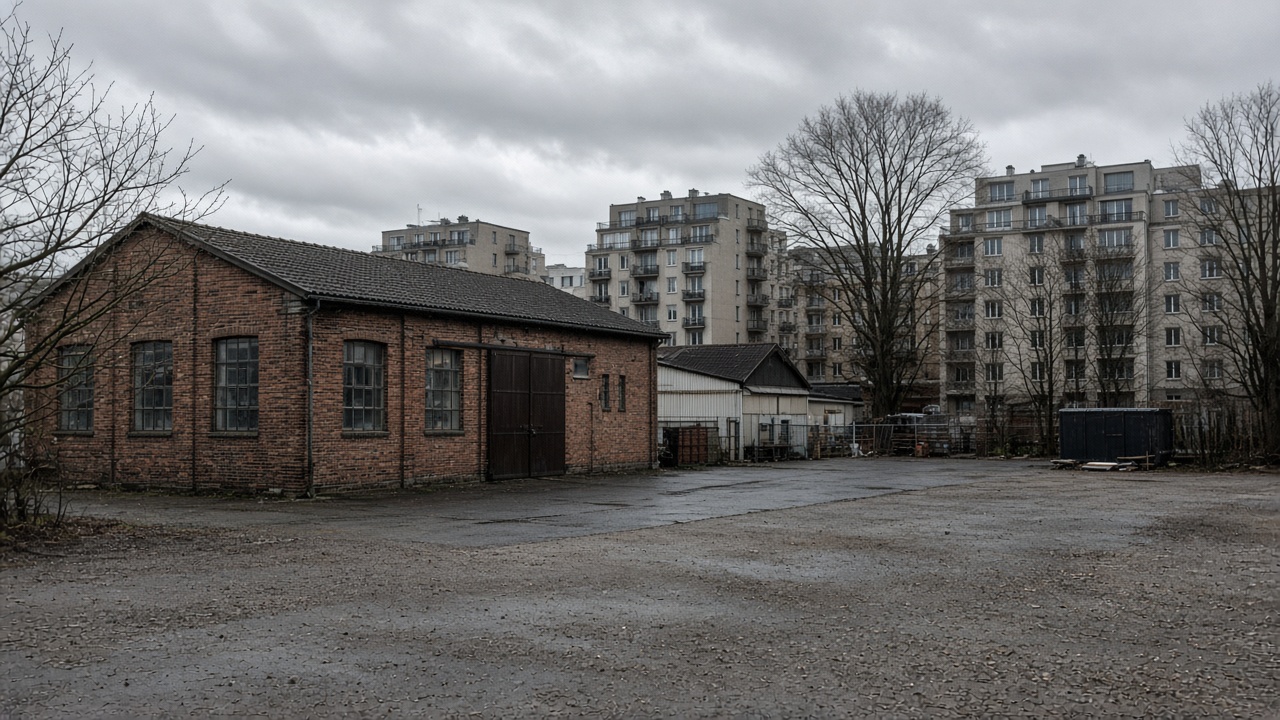
ZURICH - Consult AG and the property firm IAZI published the study on Tuesday. Researchers screened about 9,300 parcels in 123 municipalities. They looked for free ground beside an existing factory or workshop, inside today's settlement area, where a residential building could go up with no new building zone and no demolition. In the middle case that is about 16,000 homes on 1,245 plots in 115 municipalities, roughly 1.66 million square metres of floor space. About 15 percent of that middle figure closes gaps in the data with estimates. The high case is 20,611 homes. The authors say that volume would cover about nine years of the canton's housing need.
Winterthur has the room, the city has less
Winterthur leads, with about 1,200 homes, often on sites that already have decent public transport. Uster and Volketswil together come to about 1,500, with strong local demand signals in Volketswil. In the Furttal and the neighbouring Unterland, Regensdorf, Dielsdorf, Niederhasli and Niederglatt together have room for about 1,900. The study flags flood risk in Dielsdorf and aircraft noise in Niederglatt. The Neue Zürcher Zeitung, using the same figures, put the city of Zurich itself at about 428 homes. The potential is spread across the canton and still concentrated: the 100 largest parcels hold about 40 percent of the middle-case total, and the 15 largest municipalities hold about half.
The shortage the numbers are answering
Canton Zurich's population grew by nearly 13,000 people in 2025. In the same year 7,761 homes were built and 2,613 were demolished, a net gain of about 5,100, one of the lowest in 15 years. The authors calculate that building fell about 2,400 homes a year short of population growth from 2023 to 2025. Vacancies are down, and the pressure on rents is up.
The study describes what is physically possible. It does not set a building date. For a rough timetable it assumes that 30 percent of whatever potential remains would be used within ten years. A start in mid-2027 would produce about 4,200 homes by the end of 2035, about 490 a year, or roughly 8 percent of the average yearly gain from 2023 to 2025. A start in 2030 would mean about 2,900 homes. A start in 2033 would mean about 1,400. The authors leave open whether the legal basis will exist by 2027.
Homes in industrial and commercial zones are allowed today only in narrow cases, such as housing for people who must live on a site because of the business. The authors say an extra paragraph in the cantonal planning and building act would be required. A rezoning would not. The idea is familiar, and the politics are already on the record. The cantonal council rejected a postulate that asked the government for a view on opening these zones. The government has pointed instead to ordinary residential zones, which it says are still 6.8 percent unbuilt and could in theory house another 300,000 people. It has no instrument that forces an owner to build. September's density rules aimed at apartments inside existing housing zones. Tuesday's study points at the yards next door.