
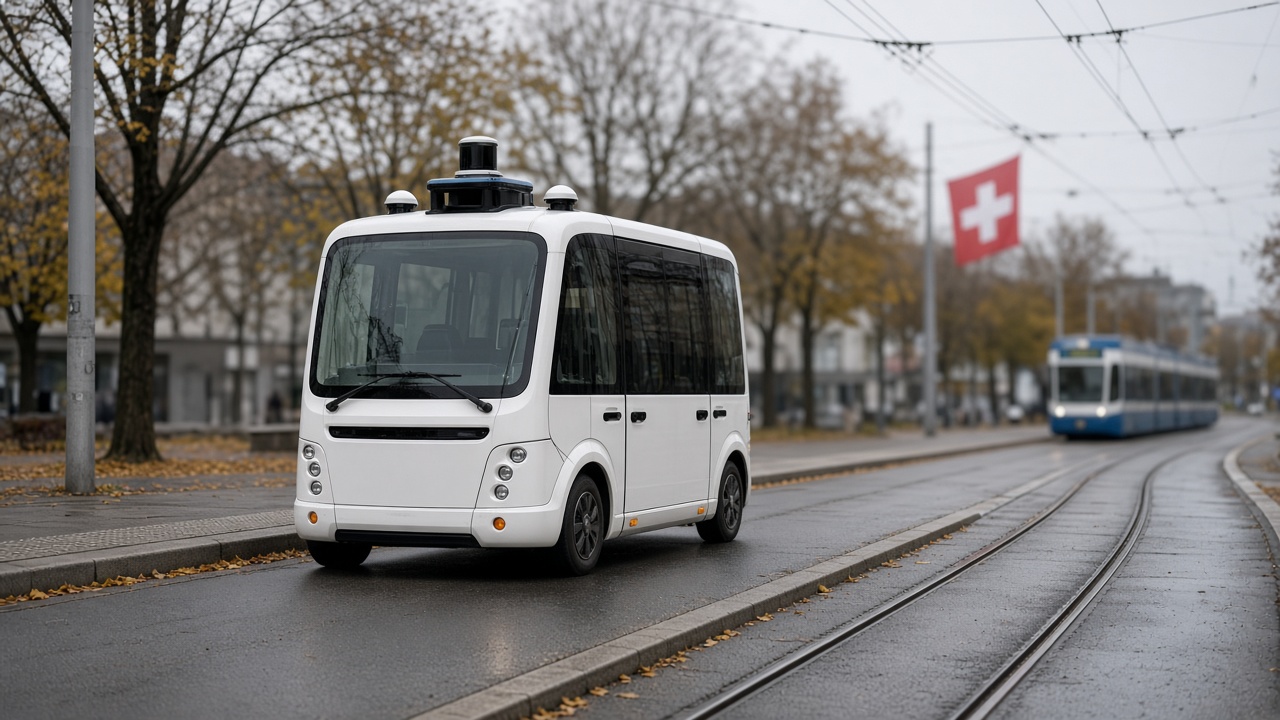
ZURICH - The first self-driving taxis have barely started rolling in Switzerland, and Zurich's left already wants them stopped at the city limits. The SP, the Greens and the Alternative List have filed a motion in the city parliament demanding a ban on robotaxis in the city of Zurich.
Only a few such vehicles are on the road so far, and for safety reasons a person still sits behind the wheel, ready to intervene. The most visible test is the pilot service in the Furttal, where SBB and the cantons of Zurich and Aargau run autonomous shuttles as a supplement to public transport, hoping to connect rural communities that buses serve poorly.
"We fear more traffic overall"
"We fear that robotaxis will mean more traffic overall," said Micha Amstad, the SP city parliamentarian who worked on the motion. The central problem, the left argues, is the empty run: vehicles circulating with nobody inside, adding to congestion and using energy for nothing. An autonomous car that cruises between rides consumes more than a taxi that simply parks, Amstad said, and the parties also worry that cheap robot rides would tempt people off their feet and out of the tram.
An expert sees fewer cars, not more
Thomas Sauter-Servaes, who researches the future of mobility at the Zurich University of Applied Sciences, reads the same vehicles differently. Used sensibly, robotaxi fleets have the potential to reduce the space traffic needs in the city, the professor argues. Private cars in Germany are driven around 40 minutes a day on average and stand idle the rest of the time. If shared autonomous cars persuaded households to give up their own, streets could gain room and parking could shrink.
Sven Sobernheim, a GLP parliamentarian trained in transport planning, also calls a ban premature. A robotaxi will not always carry just one person, he says: passengers with similar destinations can be pooled far more easily than today. He expects a future mix of robotaxis and classic public transport rather than a takeover. In Hamburg, the Volkswagen subsidiary Moia already runs such a service.
The motion now goes to the city council, whose majority has so far preferred to watch the cantonal pilots rather than legislate against them.