
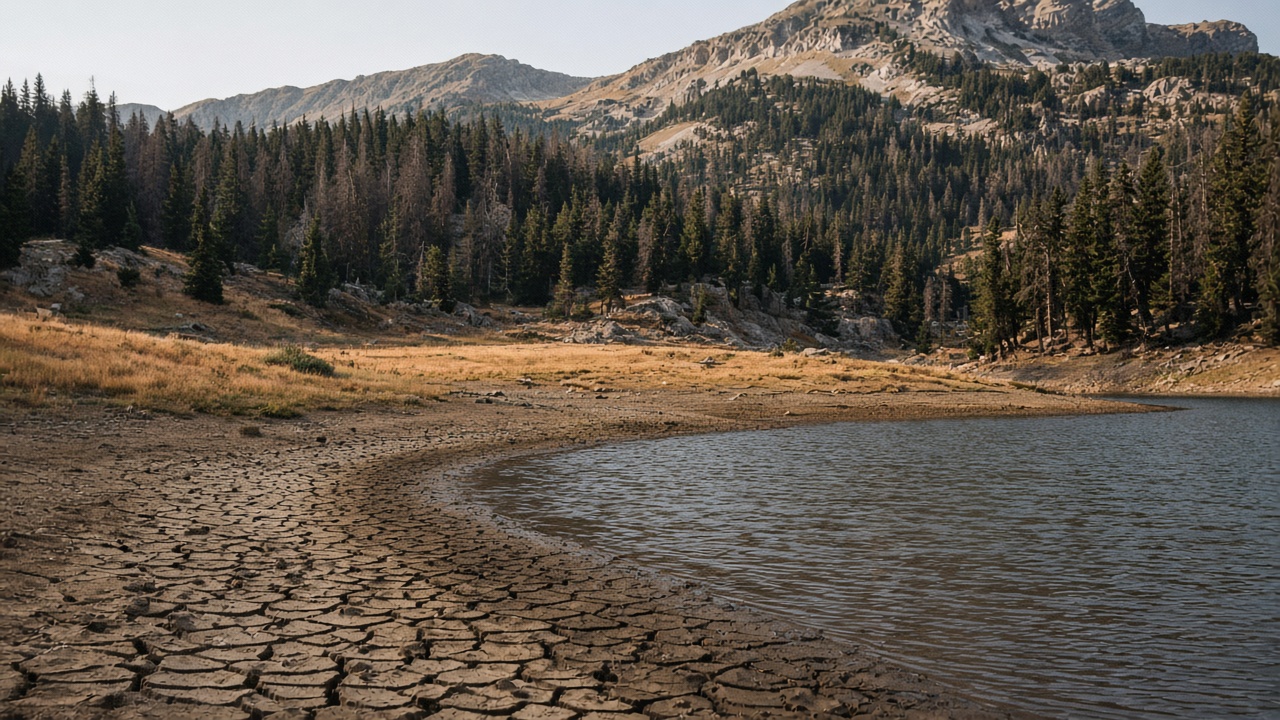
BERN - The Federal Council said the strategy sets federal goals and priorities for living with a hotter climate. It draws on the 2025 climate risk analysis from the Federal Office for the Environment and on climate scenarios from MeteoSwiss and ETH Zurich. Wednesday was the second time since August that ministers have sat down on heat and drought. In late August they asked parliament for an extra CHF 17.5 million for stressed forests and added a one-off CHF 54 million so farmers can bridge cash gaps with interest-free loans.
That August round came with a political cost. Environment Minister Albert Rösti said at the time that 35 degrees did not require disaster scenarios, and that the situation did not need a crisis meeting of the Federal Council. The lines drew heavy criticism, which internal papers later sharpened. Wednesday's plan is the longer answer to the same summer, the one that also left a rain deficit across the country.
A health office for heat
The Federal Office of Public Health is to build a competence centre on health risks from heat and climate. It will coordinate the offices involved and monitor whether adaptation measures work. Inside that work, the recording of heat-related deaths and hospital admissions is to be improved. The government also wants a risk-based scheme for watching cooling towers and other water systems where legionella can grow.
Construction sites are the unresolved piece. Roundtable talks on working in heat did not produce a deal, so the federal government will invite the social partners to try again for minimum health protections on building sites. For animals and the food chain, the Federal Food Safety and Veterinary Office gets extra research money.
Forests, farms and the drought map
The federal drought platform, running since 2025, is to be developed so that the effects on individual parts of the economy can be seen. The cost is CHF 2.1 million, to be requested for 2029 in the next financial plan. MeteoSwiss is to draw new national heat maps and extreme scenarios. Extra tasks in the interior department are priced at CHF 4.4 million a year from 2027, and CHF 3 million a year from 2030.
None of this rebuilds the summer that has just ended. The forest credit and the farm loans were the emergency tools. The 56 measures are the standing ones, and they run to 2031. Low water on the Rhine, which is now disrupting fuel barges, is a reminder that the same dry pattern still has a bill in autumn.