
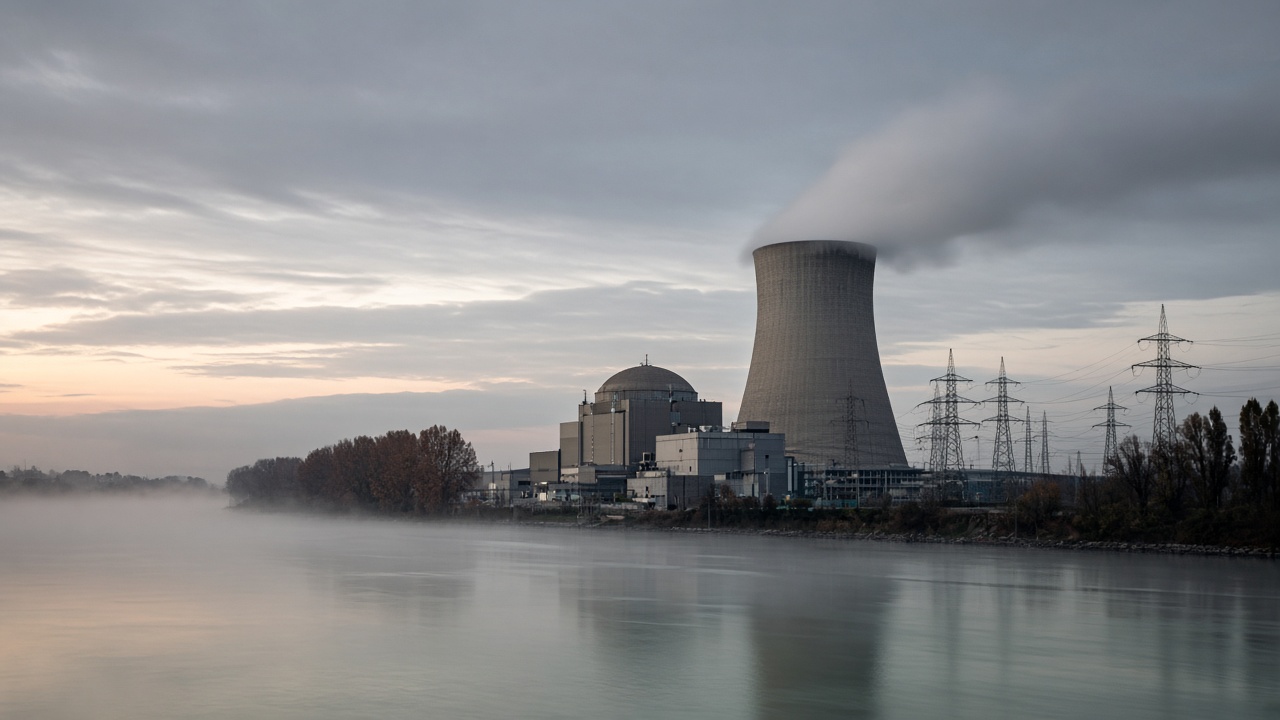
GÖSGEN - An automatic reactor scram brought the Gösgen nuclear power plant to a halt in the early hours of Tuesday, the second unplanned interruption in a year that was supposed to mark the plant's return to calm routine. Kernkraftwerk Gösgen-Däniken AG said the trigger was an undervoltage on the rails that supply the control rods.
"With the automatic shutdown, all safety-relevant systems responded as provided," the company said in its morning statement. No additional release of radioactivity occurred, the plant is in a safe condition, and the Federal Nuclear Safety Inspectorate was informed immediately. The reactor will stay offline until the inspectorate, known as ENSI, grants formal clearance to start up again.
What a scram actually means
In a rapid shutdown, the control rods drop into the reactor core within seconds and break the chain reaction. It is the most routine of the emergency moves a plant can make, and operators train for it constantly. The physics of the pressurised water reactor then keeps residual heat removal running through the ordinary cooling circuits.
What matters for the safety case is less the trip itself than the reason behind it. An undervoltage on the control rod supply points to the electrical systems rather than the nuclear island, and investigators will now trace whether the fault sat in a transformer, a switchboard or the cabling. ENSI gave no timetable on Tuesday for its verdict, saying only that it would examine the operator's reporting before any restart.
A difficult year for the Solothurn plant
Gösgen only returned to power in late March after a ten-month standstill for work on its feedwater system, one of the longest outages in the plant's history. The annual revision in June passed without incident, and the plant had been running at full load through the dry summer and into the autumn.
The 1,060 megawatt reactor, in service since 1979, normally produces roughly an eighth of the electricity Switzerland consumes in a year. Its absence from the grid on Tuesday morning was covered without drama, though a prolonged outage in the heating season would tighten a supply situation already strained by the drought that has emptied reservoirs across the Alps.
Timing the nuclear debate did not choose
The incident lands in the middle of Switzerland's most sensitive energy argument in decades. Voters decide in February 2027 whether to lift the ban on building new nuclear plants, a campaign this newspaper has followed since the proposal moved toward the parliamentary floor. Supporters of new nuclear capacity argue the existing fleet is ageing and irreplaceable in winter; opponents will point to Tuesday as proof that even a well-run plant is never far from an unplanned stop.
Both camps were careful on Tuesday morning. The operator stressed that the safety chain worked exactly as engineered, while critics noted that a scram is by definition an event outside normal operation, even when it ends safely. Across the border in canton Zug, the Danish start-up that wants to test a thorium reactor with the Paul Scherrer Institute watched the headlines with interest, having moved its headquarters to Switzerland whatever the 2027 vote brings.