
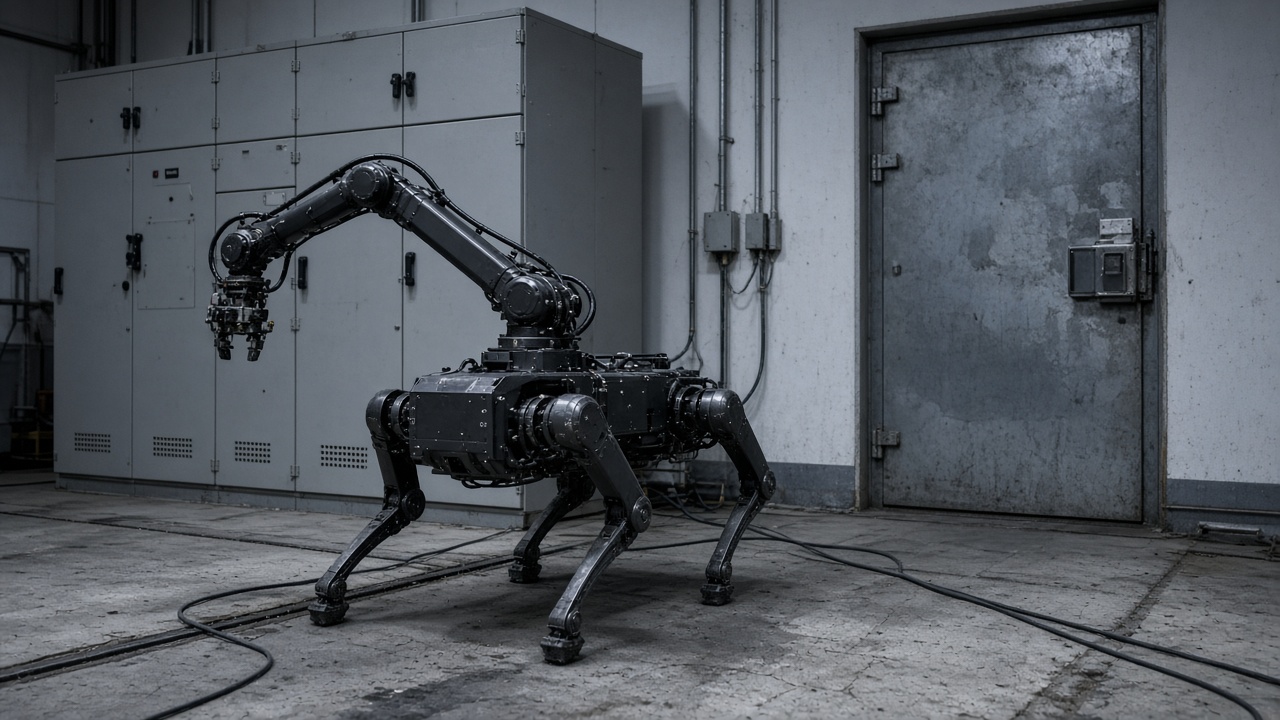
BIASCA - SBB and ETH Zurich on Wednesday presented a remote-controlled robot at the railway's maintenance and intervention centre in Biasca. The machine is built for simple jobs inside the Gotthard Base Tunnel: flipping a switch, opening a door, standing in for a short inspection. In a mock-up of the tunnel's cabinets it drove up to a box, worked a toggle switch and shut a door. The sequence succeeded on the second attempt.
The tunnel is 57 kilometres long. It is hot, train traffic throws up dust, and many jobs can be done only from Saturday night into Sunday, when fewer trains run. As the tunnel ages, the maintenance load rises. SBB wants robots stationed inside so staff can avoid driving as far as 30 kilometres in from a portal for a small task. A robot already on site could be switched on from outside, including on a weekday while trains are running.
Staff still judge how a fault is fixed
Alberto Bombelli, who leads the innovation project at SBB, said the robots are there to support staff. Human knowledge stays indispensable, he said, because experts still have to judge how a fault is fixed. The logistics of opening one cabinet deep inside the tunnel are heavy, and the time windows are short. Asked what the machine still has to learn, he answered: "Everything." Fine motor work is where it still fails.
This single model costs about CHF 250,000. That figure includes further development to make it fit for the tunnel, as well as the hardware standing in Biasca. SBB has set no date for putting a robot on regular duty.
Tunnel light is the hard part for the machine
Vaishakh Patil, the ETH scientist leading the work with SBB, said similar robots are already used on oil platforms, mostly to watch and diagnose. On that comparison, the Gotthard machine is a prototype. SBB asked the researchers to recreate a tunnel-like space, with lighting unlike a lab or a platform. Patil said that lighting is a genuine problem for the robot, and that this is the kind of problem his group works on.
An operator steers it with a joystick for movement and a separate arm controller for fine tasks. The ETH researchers described the control as something that takes a lot of practice. The demonstration is about equipment in a tunnel, and it is separate from SBB's camera trial for counting passengers, which the railway says stores no faces.
The pass road above the tunnels closes on Thursday
While the robot was being shown in Biasca, the roads office was preparing to close the Gotthard pass road for winter from Thursday morning. Cars will use the A2 road tunnel. Trains keep using the base tunnel, which is the bore this robot is being built for. The snow closure and the maintenance trial are separate jobs on the same mountain. SBB and the transport office have put the wider digital-rail programme at about CHF 7 billion through 2045. That is the larger bill. A CHF 250,000 prototype is a small line in it, and it is the line that has to work in the dark, the heat and the dust.