
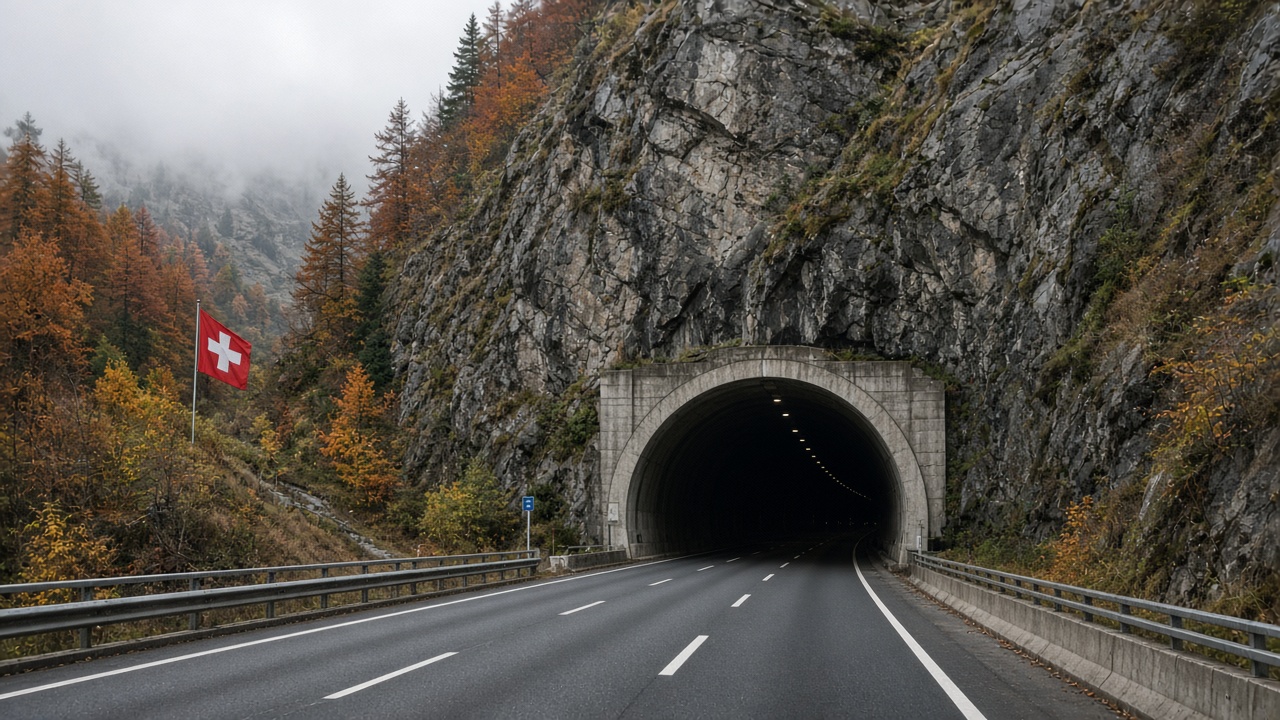
BERN - The commemoration on Monday marks a quarter of a century since the morning that changed Alpine tunnel safety forever. At 9:39 on 24 October 2001, a Belgian lorry travelling at around 40 kilometres per hour brushed the tunnel wall roughly a kilometre after the Airolo portal and veered onto the opposite lane. The driver of an oncoming Italian lorry braked and swerved, but the two trucks clipped each other.
The impact burst a fuel tank. Diesel spilled out, and a short circuit in an electric cable ignited the diesel-air mixture. Within minutes, the two lorries and their cargo, including hundreds of tyres, were burning at temperatures far above 1,200 degrees. Eleven people lost their lives. The tunnel stayed closed for two months, and the damage to the infrastructure came to CHF 14 million.
Safety rebuilt around escape
The list of changes that followed reads like an engineering manual rewritten by grief. The tunnel received a new ventilation system with modern flaps and controls, brighter lighting in two strips, and escape-route signs every 25 metres showing the distance to the nearest exit. Escape tunnel entrances were marked, traffic lights installed on both lanes instead of one, and the escape gallery gained its own redundant ventilation. New emergency call and radio systems went in, video recording was upgraded, and a drip-feed counting system now helps manage the flow of vehicles.
The checks went far beyond the Gotthard. Every national road tunnel longer than 600 metres was inspected after the fire, and where necessary immediate measures followed: signage, guidance systems, lighting. On top of ordinary maintenance, the Federal Roads Office has invested around CHF 1.6 billion in tunnel safety, and fire services across the country rewrote their training for tunnel operations.
The tunnel today
The road through the mountain has rarely been busier. More than six million vehicles cross the 17-kilometre tunnel each year, around 630,000 of them lorries, and peak weekends still produce the queues documented in our winter traffic reports. Accident numbers, though, have fallen markedly since 2001.
Politically, the fire also paved the way for the second road tube that will one day allow the old bore to close for renovation without stopping traffic. And the debate over how Switzerland manages congestion on its motorways continues, most recently in the dispute over traffic lights at more than 120 motorway entrances. Monday's ceremony will be quieter: names, candles, and a tunnel that hums on regardless.