
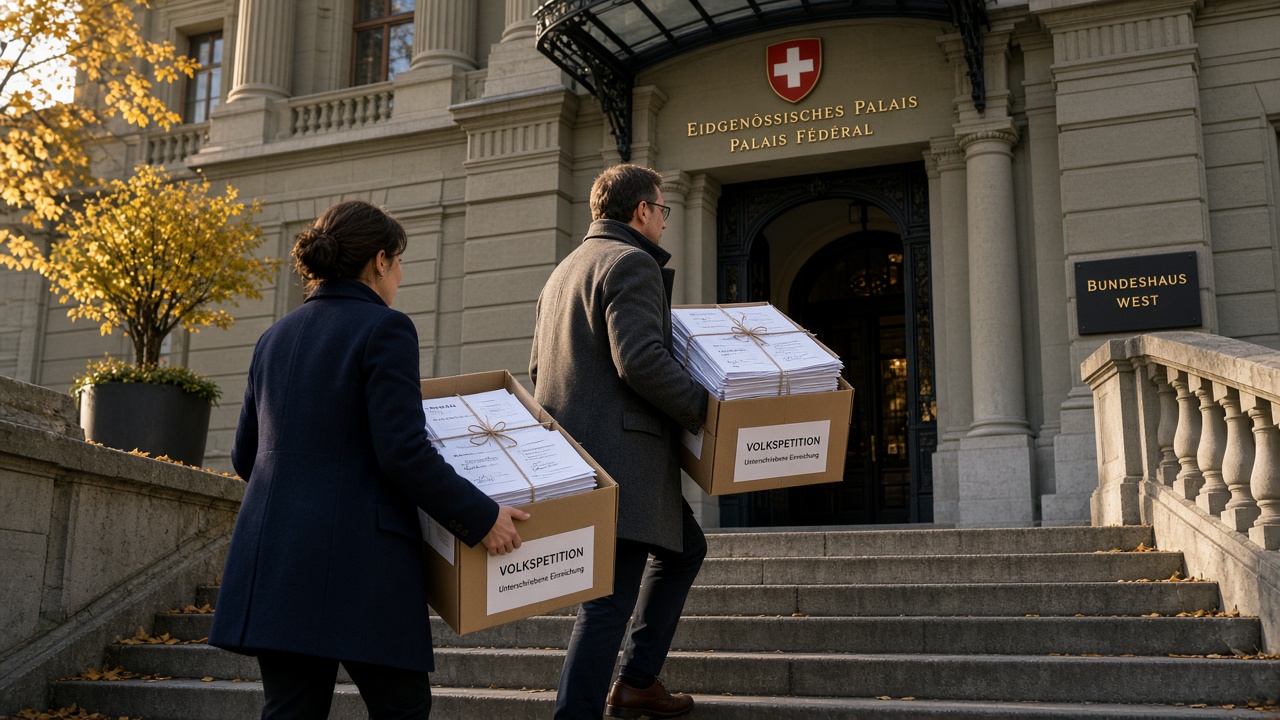
BERN - The fight over who sets the floor under Swiss wages will go to the voters. On Wednesday, trade unions and left parties submitted more than 100,000 signatures for a referendum against parliament's reform of collective labour agreements, twice the 50,000 valid names required. The Federal Chancellery will now verify the signatures before a date for the nationwide vote is set.
The disputed reform would let collective labour agreements, negotiated between unions and employers for a sector or a company, take precedence over the minimum wages that voters in several cantons and municipalities have approved at the ballot box. For the referendum committee that reverses the order of democracy: a pay floor adopted by the people, they argue, should not be negotiable below its own level by contract.
What is at stake in the cantons
Minimum wages introduced by popular vote are a recent but spreading feature of Swiss labour law, led by cantons in French-speaking Switzerland and Basel-Stadt, with Geneva the best known case. On the same Wednesday that the signatures were delivered, Geneva announced that its minimum wage will rise to CHF 24.73 an hour from 1 January, up from CHF 24.59 today. It is precisely this kind of voter-approved rate, adjusted by cantonal decision, that the committee says the reform would hollow out where a collective agreement sets lower pay.
Supporters of the reform, which carried both chambers during the parliamentary term, counter that collective agreements are the backbone of Swiss labour peace and that sectoral deals, often covering holidays, training and working time as well as pay, should not be trumped by a single cantonal number.
The road to the ballot
If the Chancellery confirms enough valid signatures, as the cushion of more than 50,000 spare names suggests it will, the vote joins a busy referendum calendar that already includes the EU treaty package and could feature the UBS capital law if the left follows through on its threat there. For the union movement, Wednesday's delivery doubles as a show of strength ahead of the 2027 election year.