
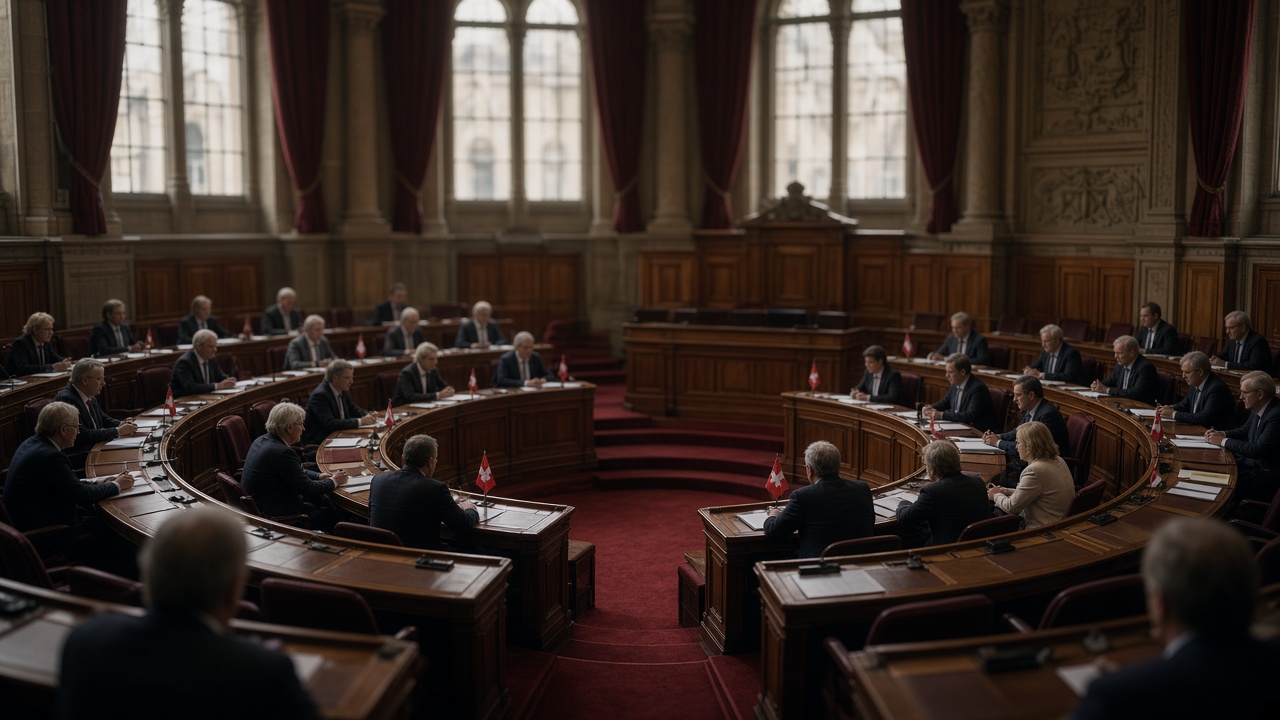
BERN - The new treaty package with the European Union will need a majority of the people and a majority of the cantons to pass, the Council of States decided on Wednesday. By 23 votes to 17, with three abstentions, the upper house rejected the government's plan for an optional referendum and instead backed a mandatory vote on Bilaterals III.
An optional referendum, the path used for Bilaterals I and II, would have needed 50,000 signatures to reach the ballot and only a nationwide majority to pass. The Senate instead chose the so-called sui generis referendum, a rarely used instrument for treaties judged to carry constitutional weight. A separate proposal from the Commission on Political Institutions, which would secure the double majority through a constitutional amendment, was also approved.
A chamber of cantons votes like one
The split ran through parties and through cantons. In five cantons, Bern, Lucerne, Solothurn, St. Gallen and Aargau, the two members of the small chamber cancelled each other out. Heidi Z'graggen of the Centre Party argued that the question was so fundamental that a simple popular majority could not settle it. Petra Gossi of the FDP said the agreements affect the cantons directly, so the cantons should have a say, adding that a double majority would give the result greater legitimacy and stronger public confidence.
The Federal Council does not read the treaties the same way. It holds that the package does not interfere seriously enough with the constitutional order to require a double majority, and Foreign Minister Ignazio Cassis is unlikely to shift that position before the National Council takes up the file. Cassis noted after the vote that political dynamics in the larger chamber, where populous cantons such as Zurich, Geneva and Vaud carry more weight, may differ from those in the Senate.
What happens next
The package now travels to the National Council, which is expected to open its debate during the winter session in December. Both the referendum model and the Federal Council's original simple-majority proposal will be back on the table there. Only when the two chambers agree will the shape of the national vote be fixed.
A nationwide ballot before the autumn 2027 federal elections remains possible, though the parliamentary timetable would have to move quickly, and a slip into 2028 is openly discussed in the corridors. The electricity agreement, one of the package's central components, follows a separate track and is not expected in the Senate before December. Our plain-language briefing explains the three core arguments, and the road to this week runs through Monday's 29 to 15 entry vote and Tuesday's opening of the detail debate.