
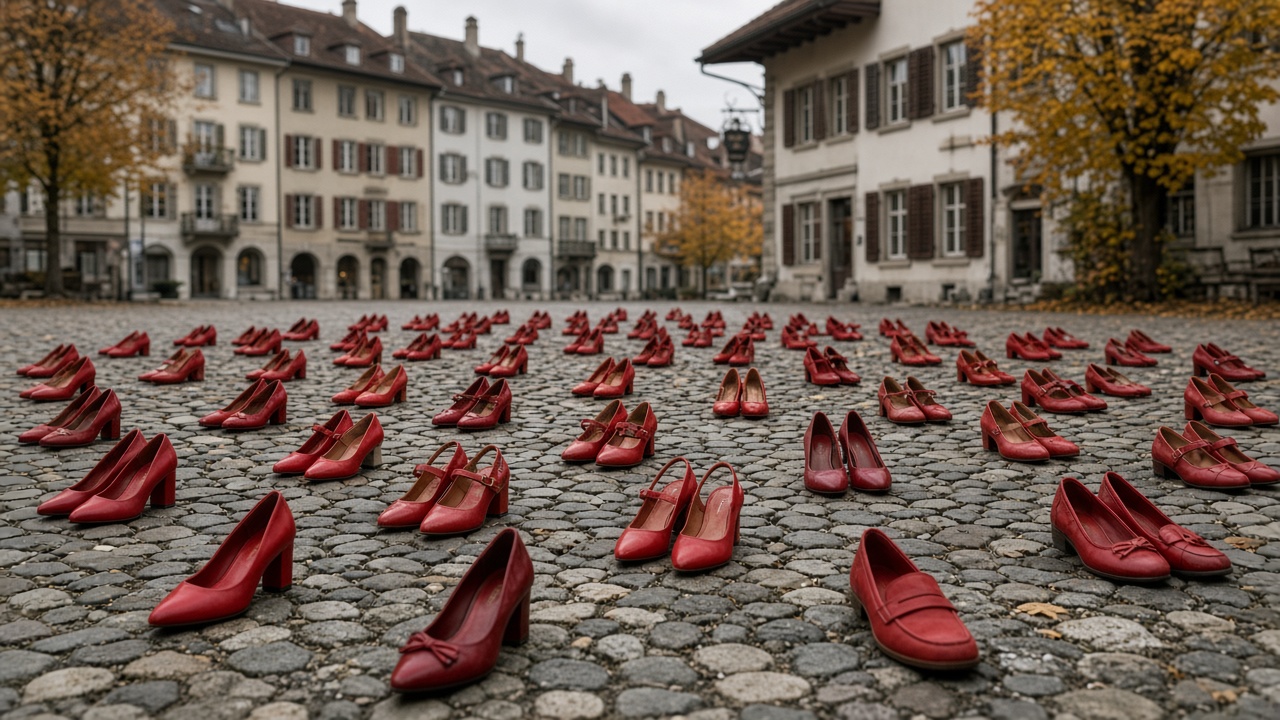
THUN - The Social Democratic Party opened its delegates' assembly in Thun on Sunday with a unanimous decision to launch a popular initiative against violence toward women. The Gewaltschutz-Initiative, or violence protection initiative, would write prevention and victim protection into federal law and oblige the Confederation to provide at least CHF 500 million a year in additional funding.
The text targets four areas: prevention, protection of victims, criminal prosecution and cooperation between the Confederation, the cantons and specialist services. The party argues that the help a victim receives today depends too heavily on her postcode, and that progress against gender-based violence has stalled despite years of promises.
"Men must not look away"
Justice minister Beat Jans told delegates that men must not look away and must not stay silent when women face violence. Domestic violence, he said, is not a private matter but one for the rule of law and the whole of society.
Tamara Funiciello, co-president of the SP Women, put numbers to the demand: 27 women were killed in Switzerland in 2025, and 18 have been killed so far this year. Those femicides, she said, are only the tip of an iceberg that includes rape, beatings, humiliation and discrimination. Party co-president Cédric Wermuth closed the debate with the line that protection against violence must become an obligation, not an offer.
Lines drawn for the coming votes
The Thun congress also fixed the party's recommendations for the votes ahead. Delegates recommend accepting the Democracy Initiative, which would make naturalisation easier through objective criteria, noting that more than a quarter of the resident population has no Swiss passport. They rejected the free trade agreement between the EFTA states and Malaysia, citing human rights and deforestation, and said no to the parliamentary counter-proposal that would soften the ban on building new nuclear power plants. Every franc invested in new reactors, co-president Mattea Meyer argued, is a franc missing for renewables.
A position paper titled "Good work for all", demanding shorter working hours, higher wages and more co-determination, rounded off the congress, along with a no to the bill that would override cantonal and communal minimum wages. Meyer and Wermuth were both confirmed in office. The party's recommendations for the 29 November votes on the 13th pension and its VAT financing were already in place before Thun.