
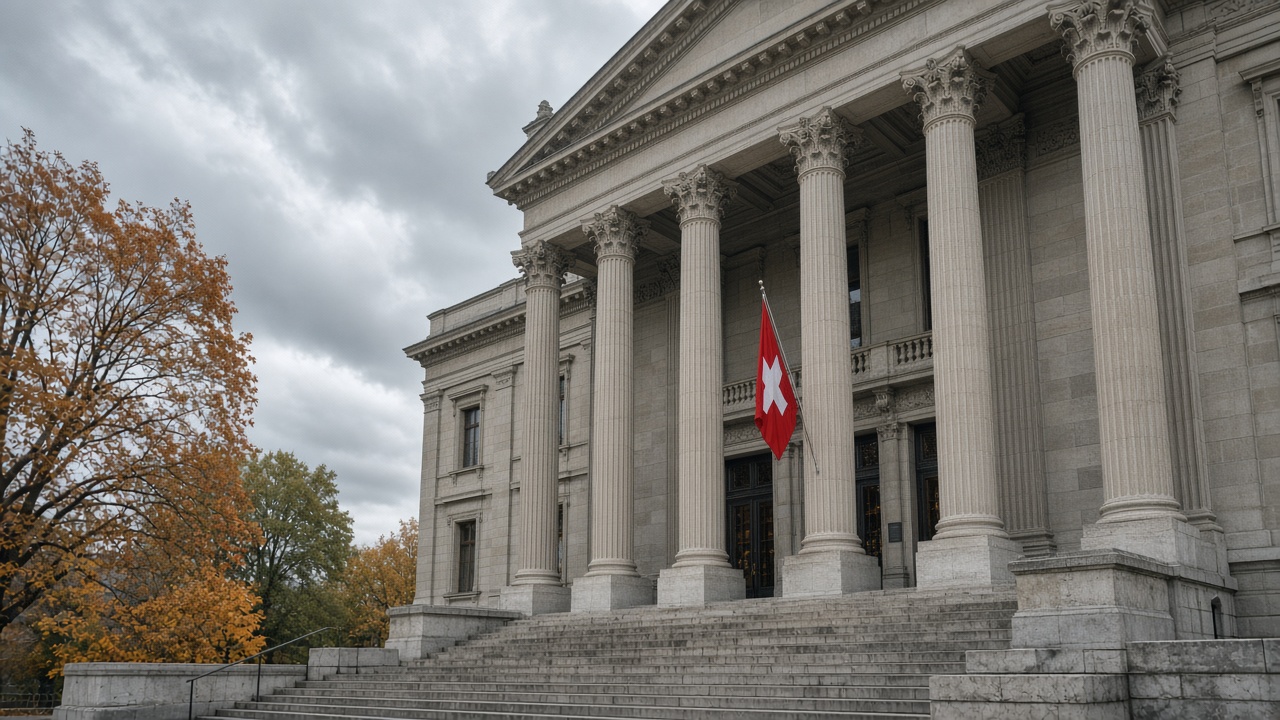
LAUSANNE - Few defendants have tested the Swiss courts as long as Erwin Sperisen. The former Director-General of the Guatemalan National Police, who led the force from 2004 to 2007, was tried four times by the Geneva courts over prisoners killed during a police operation, and convicted each time. On Thursday the Federal Supreme Court rejected his latest appeal, leaving the 14-year sentence standing.
The case reaches back two decades. During Sperisen's time at the head of the Guatemalan police, several prisoners died in a security operation inside a prison. Geneva prosecutors pursued him because he had sought refuge in Switzerland with his family in 2007, holding dual Swiss and Guatemalan nationality. He was arrested in Geneva in 2012 and has been in the Swiss justice system ever since.
Four trials, one outcome
In 2018 the Geneva Cantonal Court sentenced Sperisen to 15 years in prison for aiding and abetting murder in seven cases, a judgement the Federal Supreme Court upheld. The case took a turn in 2023, when the European Court of Human Rights found that one of the judges had shown bias and sent the proceedings back to Geneva. The Cantonal Court tried him again, convicted him again, and set the sentence at 14 years.
In its latest ruling, the Lausanne court holds that Sperisen's right to a fair trial was not infringed in the renewed proceedings. Nor can he derive any benefit from the acquittal of a co-accused person in Austria, the judges found, a line of argument his defence had hoped would crack the Geneva logic.
An end, at last, to the appeals
For the victims' families in Guatemala, who have followed the case through its many turns, Thursday's ruling is the closest thing to finality the Swiss system offers. The judgement of the Federal Supreme Court can in principle still be taken to Strasbourg, and Sperisen has used that road before. But the human rights court already set the terms for a fair retrial, and Switzerland's highest judges have now confirmed that those terms were met.
The case has been a quiet landmark for universal jurisdiction in Switzerland: a crime committed in Central America, prosecuted on the Rhone, tested in Lausanne and measured against the European Convention in Strasbourg. With the appeal dismissed, what remains is the sentence, and a file that Geneva's courts can finally close.