
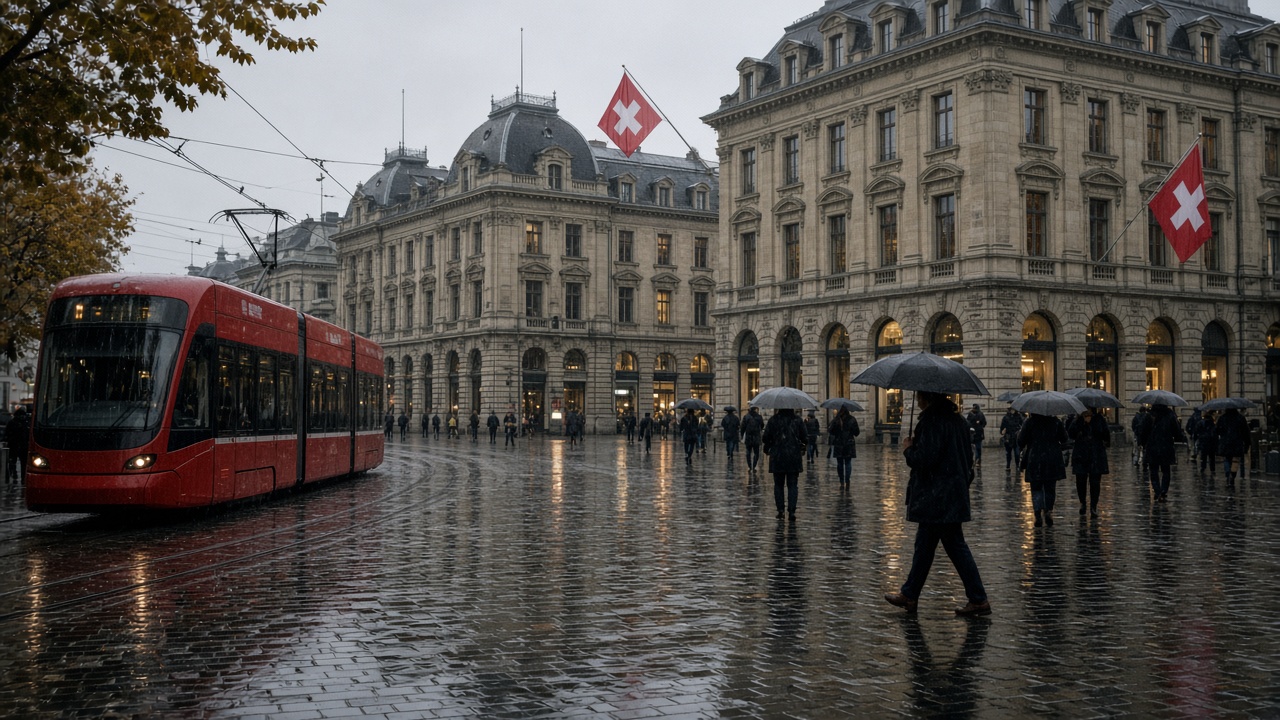
ZURICH - Ten days after the Council of States voted to make UBS back its foreign units with 90 percent hard equity, the battle lines for the second round are drawn. The National Council's economic committee takes up the bill on 26 and 27 October, meets again on 23 and 24 November, and a floor vote could follow in December. Between now and then, everything is negotiable, and everyone is negotiating.
The compromise taking shape comes from the FDP. Hans-Peter Portmann, a Zurich national councillor, has written a proposal to back foreign holdings with 75 percent CET1 instead of 90, which he plans to put to his parliamentary group. His party colleague Marcel Dobler, who sits on the committee that will handle the bill, says 90 percent goes too far: disproportionate extra costs for hypothetical safety, since no capital ratio stops a bank run. The SVP is weighing its own variant, and its Thomas Matter wants the committee to hear Finance Minister Karin Keller-Sutter, UBS and financial centre representatives again before deciding anything.
The numbers both sides bring
UBS estimates the 90 percent rule would force it to add about 16 billion dollars in CET1 capital, roughly double last year's net profit, and around 20 billion at the government's original 100 percent. Counting earlier requirements since the Credit Suisse takeover, the bank puts its total additional need near 33 billion dollars, with integration costs running at about 2.5 billion a year. The government reads the same balance sheet and finds a gap of only 5 to 9 billion, which is why it called the Senate's decision close enough to its own plan.
The bank is meanwhile behaving like a company keeping its options warm. It has studied the Nordic precedent, where Nordea moved its headquarters across a border for friendlier rules, and a second major investor has now publicly urged a Swiss exit. Chairman Colm Kelleher warned in September that UBS may have to rethink Switzerland if it cannot compete, and chief executive Sergio Ermotti has ruled out shrinking as the answer. Third-quarter results on 28 October give both men a stage.
The referendum waiting at the end
There is a catch for the compromise camp. The Social Democrats have already said they will collect the 50,000 signatures for a referendum if parliament passes a law they consider bank-friendly. A 75 percent outcome could therefore face the voters even if it passes both chambers, just as the EU package now faces a double majority. The autumn session closed with this file open; the winter session will decide how Switzerland's only global bank is allowed to be big.